Enclosed 3D printers are becoming increasingly sophisticated, and air filtration is an important consideration for many printing setups—particularly when printing thermoplastics that can release odors, volatile organic compounds (VOCs), and airborne particles during the printing process.
At Activated Carbon Depot, one of the most important questions we can help answer isn't simply whether activated carbon can be used for 3D printer filtration. It's which type of activated carbon is appropriate for the filtration system.
Should you use granular activated carbon? Are activated carbon pellets better? Does particle size affect airflow? How much carbon should a filter contain? And what is the relationship between carbon-bed depth, airflow, pressure drop, and VOC adsorption?
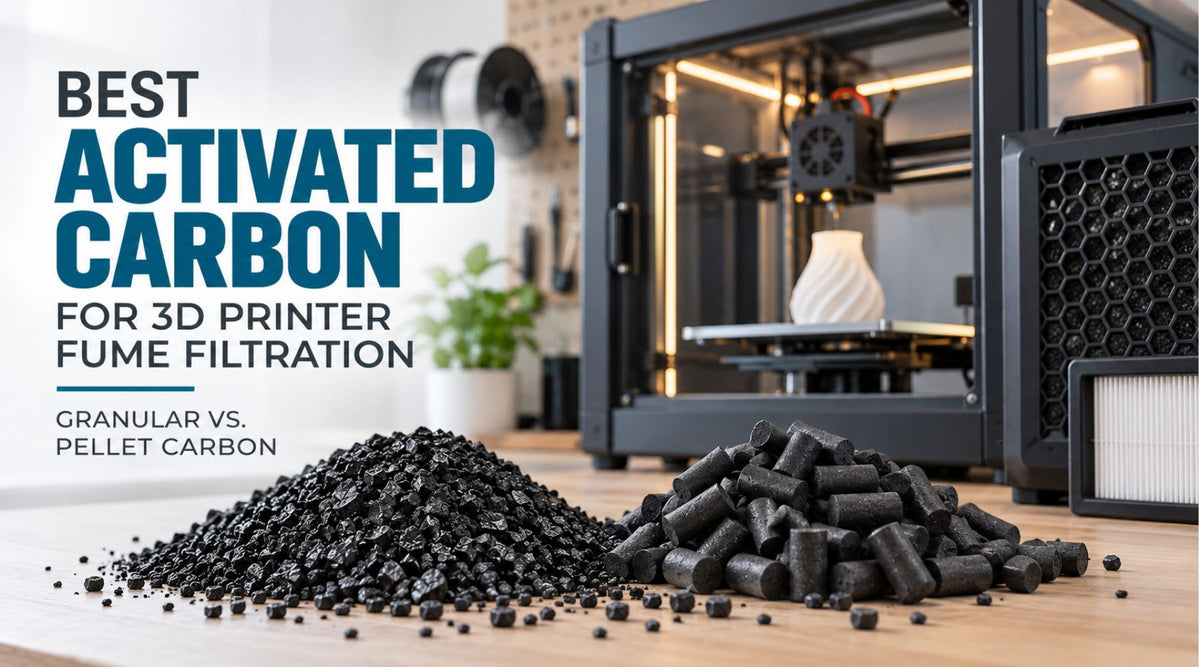
Both granular activated carbon (GAC) and pelletized activated carbon can be used for 3D printer fume filtration when the media and filtration system are properly matched. The differences become particularly important when considering airflow, pressure drop, carbon-bed depth, contact time, dust, and filter geometry.
In this guide, we'll compare granular and pellet activated carbon and explain what to consider when choosing activated carbon for 3D printers and laser fume filtration.
Quick Answer: Is Granular or Pellet Activated Carbon Better for 3D Printer Filtration?
Neither granular nor pellet activated carbon is universally better for every 3D printer filter. Granular activated carbon can provide a densely packed adsorbent bed and excellent gas-to-carbon contact, while pellet activated carbon provides more uniform particle dimensions and can offer favorable airflow and pressure-drop characteristics.
The best choice depends on the filtration system, including:
- Filter dimensions
- Fan capacity and static pressure
- Carbon-bed depth
- Airflow rate
- Required contact time
- Carbon particle size
- Dust and fines tolerance
- Amount of carbon the filter can accommodate
- Printer enclosure design
If an existing filtration system specifies a particular carbon form, particle size, or quantity, following the equipment manufacturer's specifications is generally the best starting point.
Why Is Activated Carbon Used in 3D Printer Filters?
Fused-filament 3D printing is a thermal manufacturing process. Filament is heated until it softens sufficiently to pass through the printer nozzle and is then deposited layer by layer to create a finished object.
Heating thermoplastics can generate airborne emissions. Depending on the filament, additives, printing temperature, and operating conditions, these emissions can include ultrafine particles and gaseous compounds such as VOCs.
This distinction matters because one filtration medium does not necessarily address every component of 3D printer emissions.
Particle Filtration
HEPA and other appropriate particulate filters are designed to capture airborne particles. Their primary function is particle filtration rather than gas-phase adsorption.
Activated Carbon Filtration
Activated carbon is primarily used to adsorb certain gaseous and vapor-phase compounds, including many organic vapors and odor-producing compounds.
For this reason, a properly designed 3D printer filtration system may combine particulate filtration with activated carbon rather than expecting either filtration medium to perform both functions.
How Does Activated Carbon Adsorb 3D Printer VOCs?
Activated carbon contains an extensive network of microscopic pores. During activation, carbon-rich material is processed to create and develop this internal pore structure, producing an adsorbent with an enormous internal surface area.
When contaminated air passes through a bed of activated carbon, certain molecules can travel into the pore network and adhere to its internal surfaces through a process known as adsorption.
Adsorption is different from absorption. During absorption, a substance enters the volume of another material. During adsorption, molecules accumulate on a surface.
For 3D printer filtration, activated carbon can therefore provide a gas-phase treatment stage for certain VOCs and odor-producing compounds carried through the filtration system.
However, activated carbon should not be interpreted as a universal solution for every chemical compound generated during 3D printing. Adsorption performance depends on factors including the contaminant, concentration, carbon pore structure, carbon quantity, airflow, temperature, humidity, contact time, and overall filter design.
What Is Granular Activated Carbon?
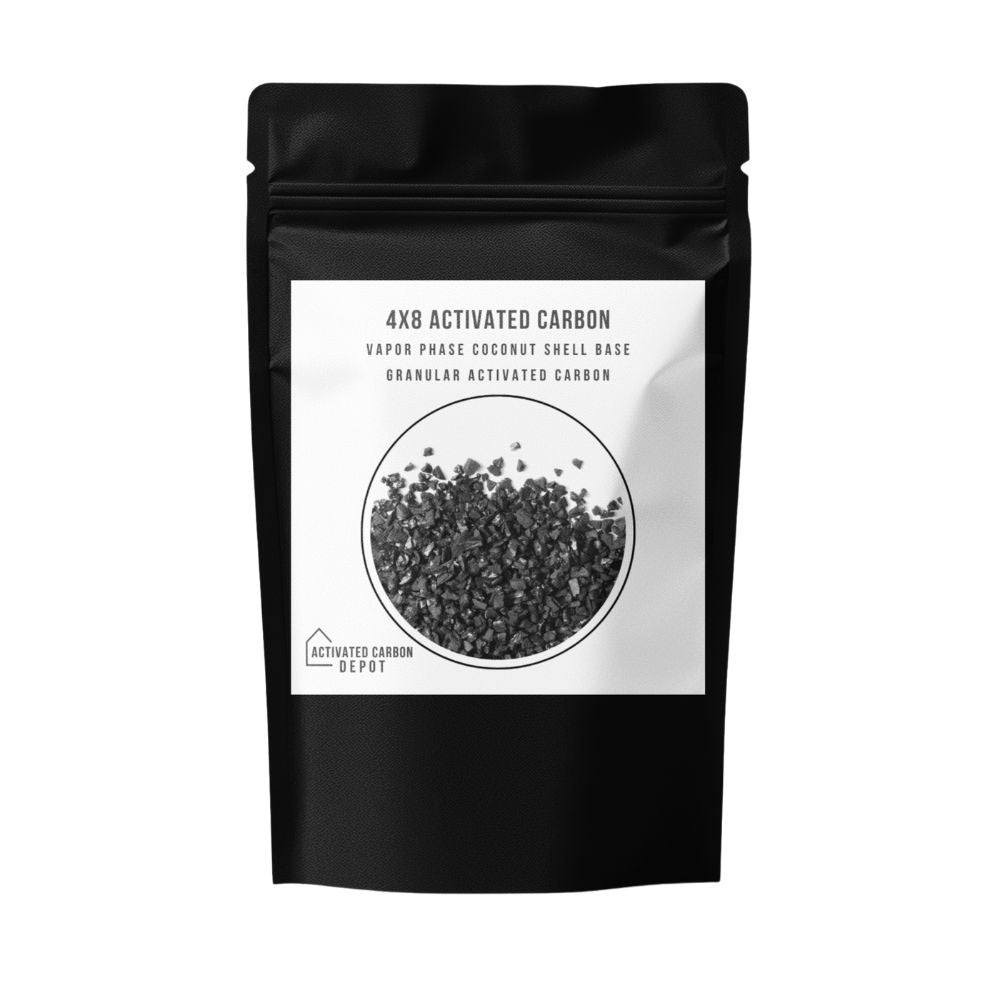
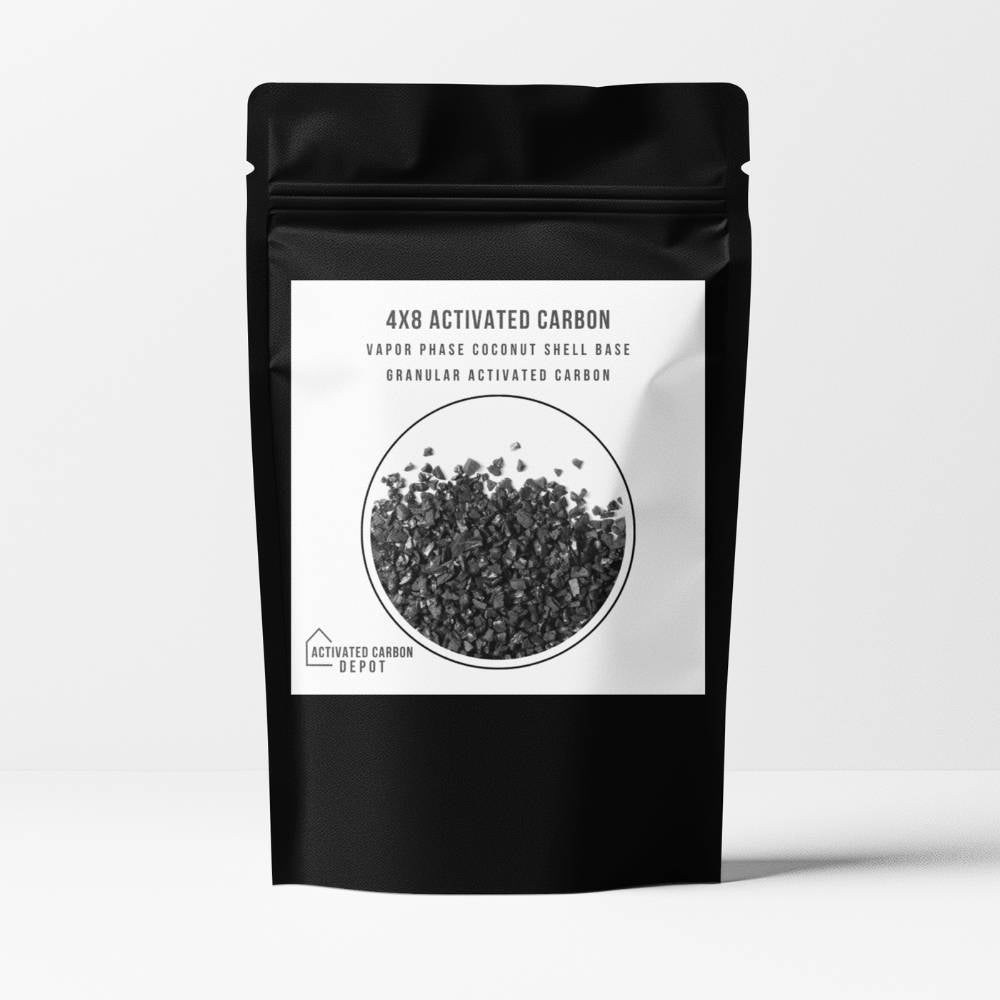
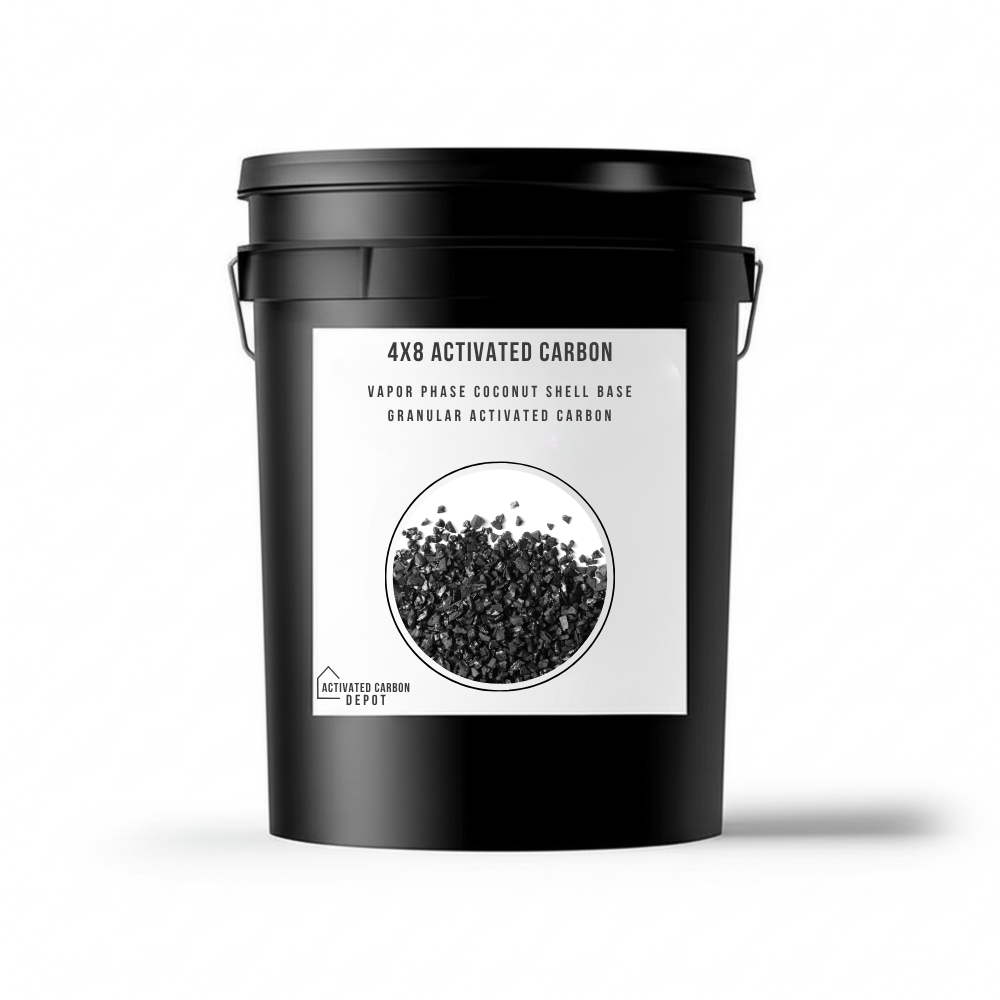
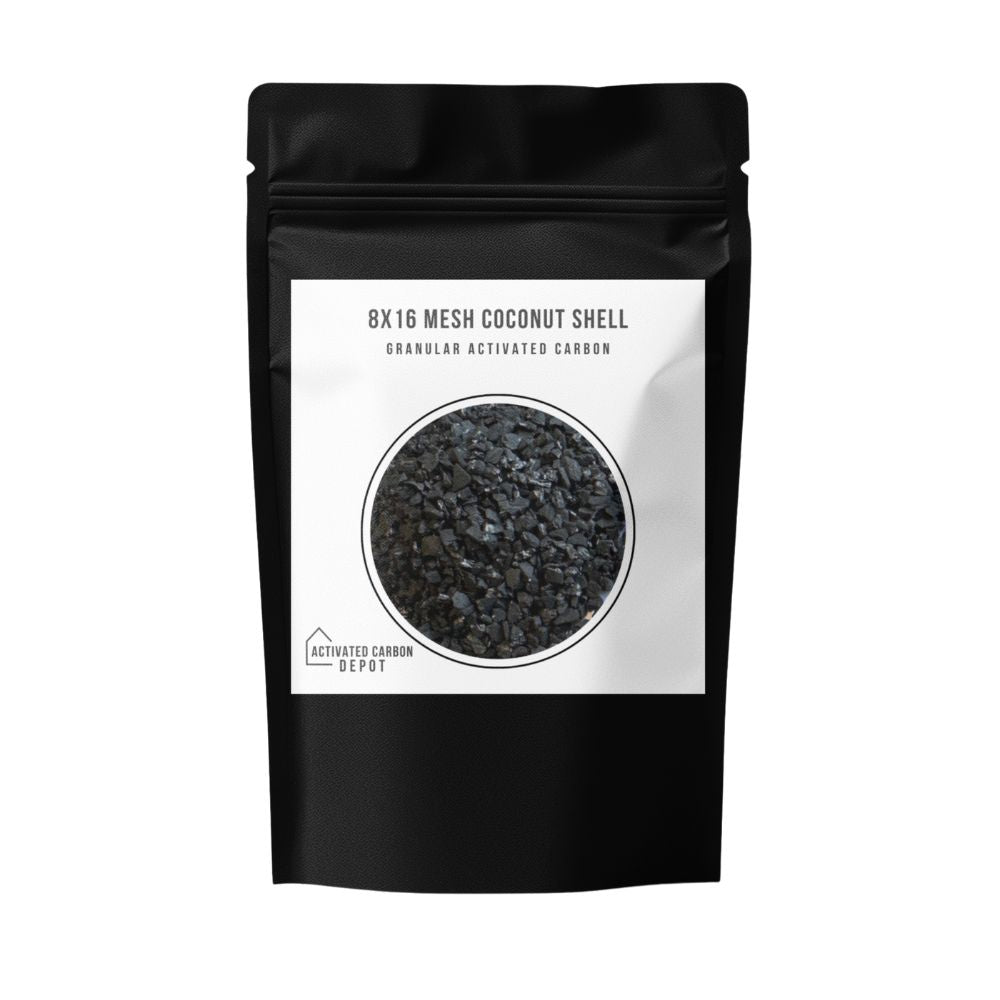
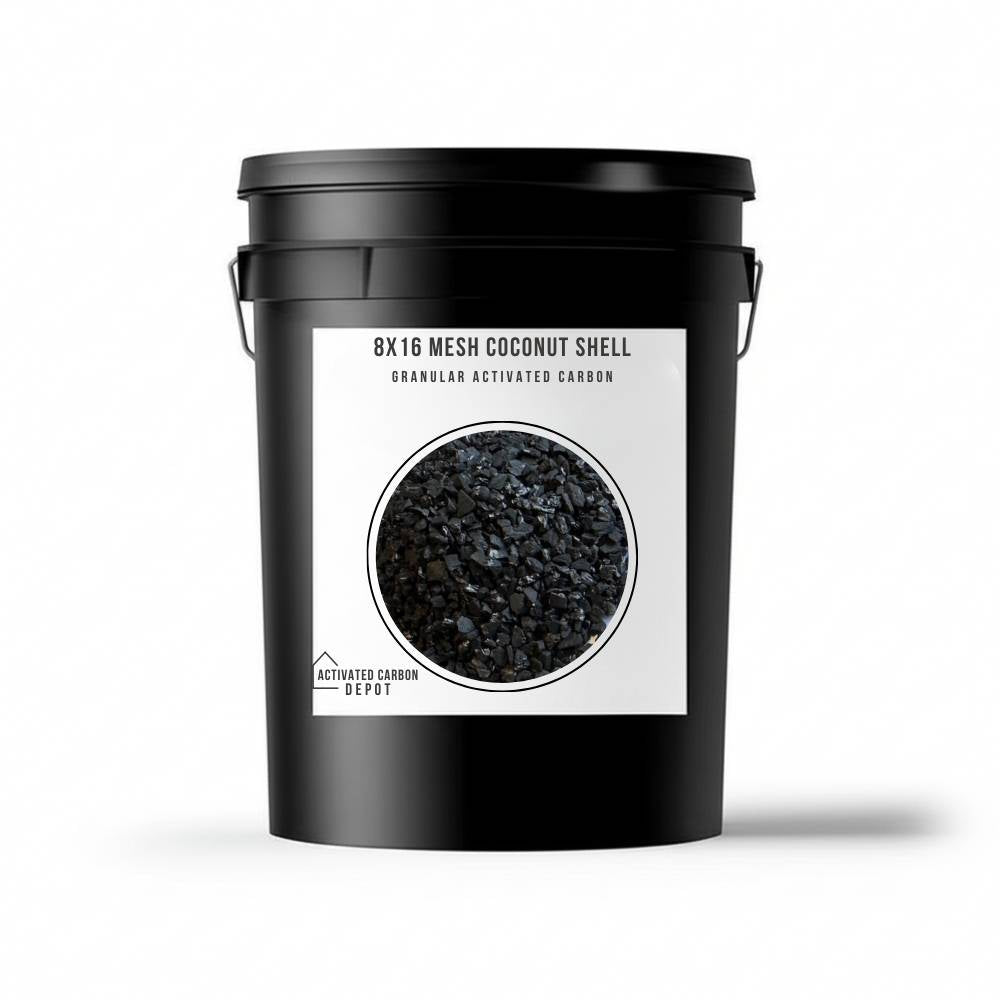
Granular activated carbon (GAC) consists of irregularly shaped activated carbon particles that are substantially larger than powdered activated carbon.
GAC is available in numerous particle-size ranges and can be used in both liquid-phase and vapor-phase adsorption systems depending on the grade.
For 3D printer and other air-filtration applications, properly selected granular activated carbon can provide:
- Extensive internal surface area
- Strong adsorption characteristics for appropriate VOCs
- Efficient packing within refillable filter housings
- Substantial carbon mass in compact filter designs
- Effective contact between contaminated air and carbon media
The irregular particles can create a relatively dense media bed. Actual airflow resistance depends on particle size, bed depth, packing density, fan characteristics, and filter geometry.
What Is Pelletized Activated Carbon?
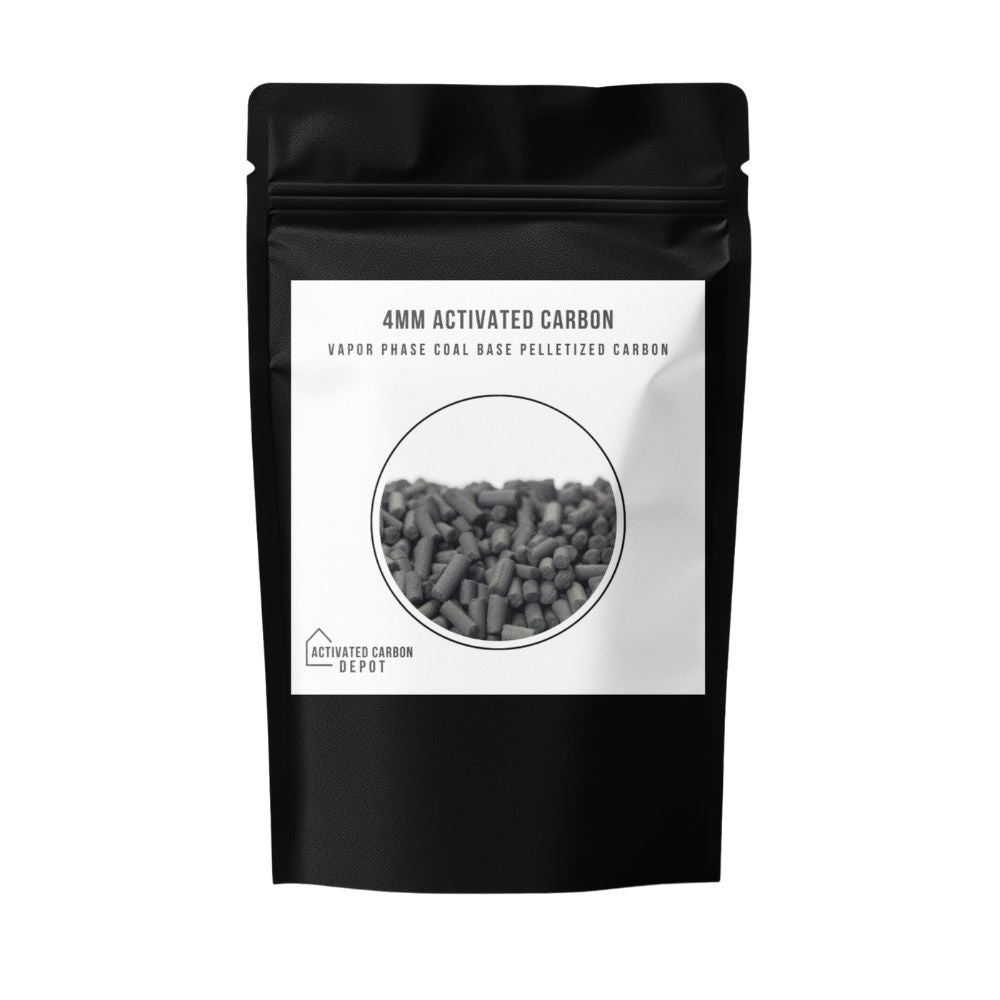
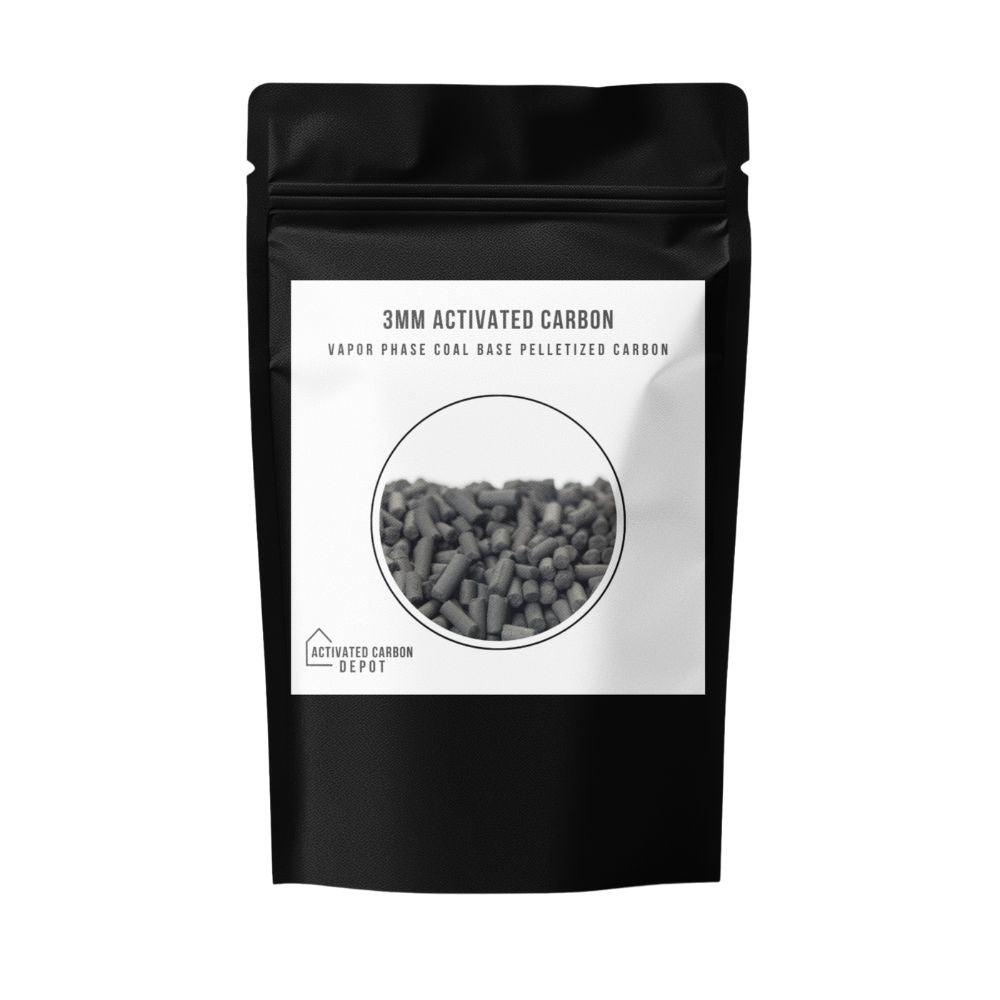
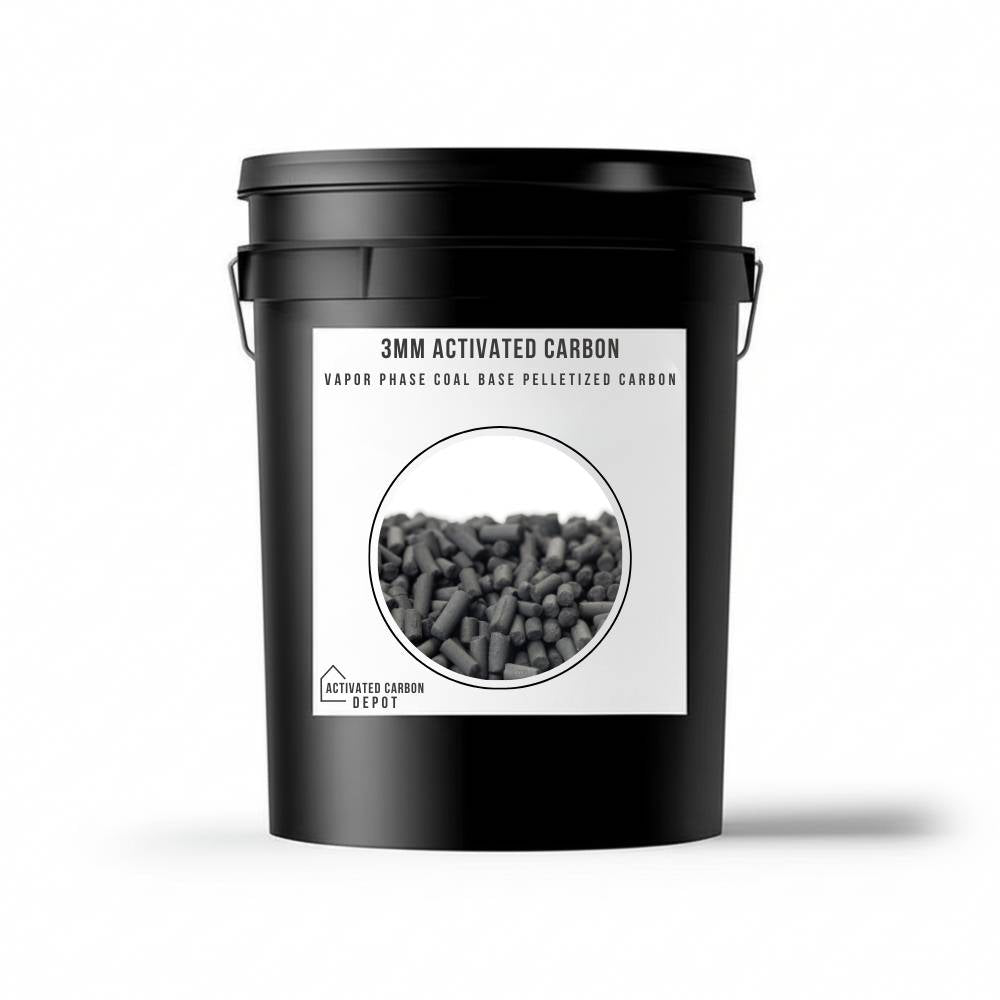
Pelletized activated carbon is manufactured in cylindrical extruded shapes with relatively uniform dimensions. Common pellet diameters used in vapor-phase filtration include approximately 3 mm and 4 mm, although other sizes are available for specialized applications.
The consistent geometry of activated carbon pellets can provide useful characteristics for air and vapor filtration systems, including:
- Consistent particle dimensions
- Good mechanical strength
- Reduced generation of fines with high-quality pellets
- Favorable airflow characteristics
- Relatively low pressure drop in appropriately designed beds
- Convenient handling and filter loading
These characteristics are among the reasons pelletized activated carbon is widely used in vapor-phase adsorption systems.
Granular vs. Pellet Activated Carbon for 3D Printer Filters
| Characteristic | Granular Activated Carbon | Pellet Activated Carbon |
|---|---|---|
| Shape | Irregular granules | Uniform cylinders |
| Packing | Irregular, potentially dense bed | More uniform bed structure |
| Airflow | Depends strongly on particle size | Often favorable for vapor filtration |
| Pressure Drop | Can increase with finer particles or deeper beds | Can be relatively low with properly sized pellets |
| Dust/Fines | Depends on carbon grade and handling | Typically lower with high-hardness pellets |
| Mechanical Strength | Grade dependent | Often high |
| Vapor Filtration | Yes, when appropriate grade is selected | Yes, commonly used |
The most important takeaway is that carbon form alone does not determine filtration performance. Carbon properties and filter design must be considered together.
Why Airflow Matters in a 3D Printer Carbon Filter
A 3D printer carbon filter needs sufficient airflow through the carbon bed. If contaminated air travels around the carbon rather than through it, adsorption performance can be significantly reduced.
At the same time, adding additional carbon or increasing bed depth can create additional resistance to airflow.
This creates an important filtration-design tradeoff:
More carbon and a deeper bed can provide greater adsorption capacity and additional contact opportunity, but greater bed resistance can reduce airflow if the fan cannot overcome the resulting pressure drop.
This issue is particularly important for compact 3D printer filtration systems using relatively small fans.
A larger carbon filter is not automatically more effective if the fan can no longer move sufficient air through the media.
Why Activated Carbon Particle Size Matters
Carbon particle size influences both adsorption dynamics and airflow through the filter.
Smaller particles can provide shorter diffusion paths into the carbon and significant contact between the gas stream and adsorbent. However, smaller particles generally create greater resistance to airflow.
Larger particles typically permit air to pass through the media bed more easily but can provide different mass-transfer characteristics.
The general tradeoff is:
Smaller particles → potentially faster mass transfer but greater airflow resistance.
Larger particles → generally lower pressure drop but different adsorption kinetics.
The optimum particle size therefore depends on the filtration system rather than simply choosing the smallest carbon available.
Why Carbon Contact Time Matters
Contaminated air needs sufficient opportunity to interact with the activated carbon.
As air passes through a carbon bed, contaminant molecules must move from the gas stream toward the carbon surface and ultimately into its pore structure.
If air travels through an extremely shallow carbon bed at high velocity, the opportunity for adsorption may be reduced.
A properly designed carbon filter therefore balances several interconnected variables:
Airflow + carbon quantity + bed depth + contact time + pressure drop
Simply placing a thin layer of activated carbon in front of a high-powered fan does not necessarily create an effective gas-phase adsorption system.
Advantages of Granular Activated Carbon for 3D Printer Filters
Granular activated carbon can be an excellent option for refillable 3D printer filters when the filter is designed for granular media.
The irregular granules can create a substantial packed carbon bed inside a relatively compact housing. Depending on particle size and carbon characteristics, GAC can provide effective contact between contaminated air and the adsorbent.
Granular activated carbon may be appropriate when:
- The filter was designed for granular media
- The housing can securely retain the particles
- Substantial carbon mass is desired within a compact space
- The fan can overcome the resulting pressure drop
- The selected carbon has suitable vapor-phase adsorption characteristics
The media must remain properly contained. Loose carbon particles and fines should not be allowed to migrate into the printer enclosure, fan, electronics, or surrounding workspace.
Advantages of Pellet Activated Carbon for 3D Printer Filters
Pellet activated carbon offers a different set of advantages.
The relatively uniform cylindrical structure creates consistent spaces between particles, which can provide favorable airflow characteristics through the carbon bed.
Pellet carbon may be particularly useful when:
- The filtration system has limited fan pressure
- Maintaining airflow is a major design priority
- A deeper carbon bed is being used
- Dust and fines need to be minimized
- The filter was designed around pelletized media
- Mechanical strength is important
Our thermally activated granular and pellet carbon for 3D printers and laser fume filtration gives users options for selecting media according to their filtration-system design.
What Does Thermally Activated Carbon Mean?
Activated carbon is not simply ordinary charcoal.
Carbon-rich raw material undergoes a controlled activation process designed to create and develop the microscopic pore structure responsible for adsorption.
Thermal activation uses elevated temperatures and controlled process conditions to develop this internal pore network.
The resulting activated carbon has substantially different adsorption characteristics from ordinary charcoal.
A material being black and carbonaceous does not automatically mean it has the pore structure, adsorption characteristics, mechanical strength, or cleanliness required for a 3D printer filtration system.
Why Acid-Free Activated Carbon Can Matter for 3D Printers
Another consideration for specialty 3D printer filtration is how the activated carbon was processed.
Some activated carbons undergo acid washing as part of manufacturing or purification. For certain 3D printer and electronics-adjacent filtration applications, users specifically seek acid-free activated carbon because they want media manufactured without an acid-washing step for use around enclosed equipment and sensitive components.
This is one reason carbon intended for 3D printer and laser filtration should not automatically be treated as interchangeable with activated carbon manufactured for unrelated liquid-phase applications.
The appropriate media should be selected for the intended application and filter design.
Should You Use HEPA and Activated Carbon Together?
HEPA filtration and activated carbon perform different functions, so they can complement one another in a properly designed filtration system.
HEPA filtration primarily addresses airborne particles, while activated carbon primarily addresses certain gases and vapors through adsorption.
A combined filtration system can therefore address different categories of airborne emissions rather than expecting one filtration medium to perform both functions.
Depending on the equipment design, a filtration system may incorporate a pre-filter, particulate filtration, activated carbon, and exhaust or recirculation stages. The appropriate configuration should follow the printer or filtration-system manufacturer's design.
Activated Carbon for ABS, ASA, PLA, PETG and Other Filaments
Different thermoplastics can produce different emission profiles when heated. Emissions can also vary among products within the same general filament category.
Factors that can influence emissions include:
- Polymer type
- Pigments
- Fillers
- Other additives
- Nozzle temperature
- Print-bed temperature
- Printer enclosure
- Print duration
- Filament formulation and manufacturer
For this reason, we do not recommend assuming that a single activated carbon will capture every compound generated by ABS, ASA, PLA, PETG, or another filament under every printing condition.
Activated carbon should be considered one component of an overall emissions-control strategy that may also include enclosure design, particulate filtration, appropriate ventilation, and manufacturer-recommended safety practices.
How Much Activated Carbon Should a 3D Printer Filter Use?
There is no universal quantity of activated carbon that is correct for every 3D printer filter.
An otherwise identical filter containing more activated carbon generally has greater potential adsorption capacity than one containing substantially less media, but carbon quantity alone does not determine filter performance.
A properly designed filter should also consider:
- Carbon-bed depth
- Filter cross-sectional area
- Air velocity
- Fan performance
- Static pressure
- Pressure drop
- Carbon apparent density
- Filter geometry
- Potential air bypass
- Expected contaminant load
This is why comparing 3D printer filters solely according to the number of grams of activated carbon can be misleading.
We'll explore these variables in detail in our upcoming guide, How Much Activated Carbon Do You Need for a 3D Printer Filter?
How Often Should Activated Carbon Be Replaced in a 3D Printer Filter?
Activated carbon does not have unlimited adsorption capacity.
As contaminants accumulate within the carbon, available adsorption sites become increasingly occupied. Eventually, contaminant breakthrough can increase and the media must be replaced.
There is no universal replacement interval because activated carbon service life depends on variables such as:
- Printing frequency
- Filament composition
- Printing temperature
- Carbon quantity
- Contaminant concentration
- Airflow
- Humidity
- Carbon characteristics
- Filter design
A printer used heavily with higher-emission materials can load a carbon bed differently from a printer used occasionally.
The return of noticeable odors can indicate a change in filter performance, but odor should not be treated as a reliable measurement of contaminant concentration or filter effectiveness.
Where exposure control is important, follow printer and filter manufacturer recommendations along with appropriate ventilation practices.
Common Mistakes When Using Activated Carbon for 3D Printer Filtration
Using Too Little Carbon
A very thin carbon layer can provide limited adsorption capacity and reduced gas-to-carbon contact.
Packing the Filter Too Tightly
Excessive packing can restrict airflow, particularly when a filtration system uses a fan with limited static-pressure capability.
Allowing Air to Bypass the Carbon
A large quantity of carbon accomplishes little if contaminated air can travel around the media rather than through it. Filter housings should be designed to direct the intended airflow through the carbon bed.
Ignoring Particle Filtration
Activated carbon should not be expected to replace an appropriate particulate filter when particle control is required.
Using Random Charcoal
Barbecue charcoal, generic charcoal, and activated carbon engineered for vapor-phase filtration are not automatically interchangeable. Use filtration media appropriate for the intended application.
Never Replacing the Activated Carbon
Activated carbon is consumable filtration media. Once sufficient adsorption capacity has been used, the media requires replacement.
Granular or Pellet Activated Carbon: Which Should You Choose?
Consider Granular Activated Carbon When:
- Your filter is designed for granular media
- You want substantial carbon mass within a compact volume
- Your housing can securely retain the granules
- Your fan can handle the resulting pressure drop
- The carbon specifications are appropriate for vapor treatment
Consider Pellet Activated Carbon When:
- Maintaining airflow is a major consideration
- Your filtration system was designed for pellets
- You want relatively consistent particle dimensions
- Low dust and good mechanical strength are priorities
- You are designing a deeper vapor-phase carbon bed
Neither choice eliminates the need to evaluate the rest of the filtration system.
Activated Carbon for Refillable 3D Printer Filters
Refillable carbon filters can allow exhausted activated carbon to be removed and replaced with fresh media rather than requiring the entire filter housing to be discarded.
Before filling a reusable filter, verify:
- Which carbon form the filter requires.
- The appropriate granule or pellet size.
- The manufacturer's recommended fill quantity.
- How densely the media should be packed.
- Whether retention screens, pads, or other components are required.
- The required fan performance.
- The recommended media replacement procedure.
Following the filter manufacturer's specifications is preferable to guessing at the appropriate media configuration.
Can Activated Carbon Be Used for Laser Fume Filtration?
Many of the same adsorption principles apply to laser cutting and laser engraving filtration.
Laser processing can generate both particles and gaseous compounds, with the specific emissions depending heavily on the material being processed.
A laser fume filtration system may therefore combine particulate filtration with activated carbon or other gas-phase adsorbents.
However, activated carbon does not make an unsafe material safe to laser. Certain materials can generate dangerous decomposition products and should not be processed simply because a carbon filter is present.
Always follow the laser equipment manufacturer's guidance, material safety information, and appropriate ventilation requirements.
Thermally Activated Carbon for 3D Printers From Activated Carbon Depot
At Activated Carbon Depot, we offer Thermally Activated Granular & Pellet Carbon for 3D Printers and Laser Fume Filtration for customers building, maintaining, or refilling compatible filtration systems.
Offering both granular and pelletized options allows customers to select activated carbon according to the physical requirements of their filtration equipment rather than assuming one carbon form is appropriate for every system.
When comparing carbon media, we recommend looking at the complete filtration system:
Carbon type → particle size → carbon quantity → bed depth → airflow → pressure drop → contact time
All of these variables interact.
Frequently Asked Questions About Activated Carbon for 3D Printers
Is granular or pellet activated carbon better for a 3D printer?
Neither is universally better. Granular activated carbon can provide a densely packed adsorbent bed, while pellet carbon can provide favorable airflow characteristics and consistent particle dimensions. The appropriate choice depends on the filter housing, fan, carbon-bed depth, airflow requirements, and other system characteristics.
Does activated carbon remove 3D printer VOCs?
Activated carbon can adsorb many organic vapors, but its effectiveness depends on the specific compound, carbon characteristics, carbon quantity, contact time, airflow, humidity, temperature, and filter design. Activated carbon should not be assumed to remove every compound produced during 3D printing.
Does activated carbon replace a HEPA filter?
No. The two filtration technologies serve different primary purposes. HEPA filtration targets particles, while activated carbon primarily provides gas- and vapor-phase adsorption. They can be used together in appropriately designed filtration systems.
Are carbon pellets good for 3D printer filters?
Pelletized activated carbon can be well suited to 3D printer filtration systems designed for pellet media. Its consistent shape, mechanical strength, and favorable airflow characteristics make it useful in many vapor-phase filtration applications.
Can I refill a 3D printer carbon filter?
Some carbon filter housings are specifically designed to be refillable. If your filter supports media replacement, follow the manufacturer's requirements for carbon form, particle size, fill quantity, packing, retention, and replacement procedures.
How long does activated carbon last in a 3D printer filter?
There is no universal service-life interval. Carbon life depends on printing frequency, emissions, filament, carbon quantity, airflow, humidity, temperature, and filtration-system design. Follow the filter manufacturer's replacement guidance where available.
Final Thoughts: Choosing the Best Activated Carbon for 3D Printer Fume Filtration
Both granular and pelletized activated carbon can be useful for 3D printer fume filtration when properly selected and incorporated into a suitable filtration system.
The question should not simply be, "Which carbon adsorbs VOCs?"
A better question is, "Which activated carbon works properly inside my filtration system while providing adequate adsorption opportunity and maintaining the airflow the system requires?"
Granular activated carbon can provide substantial media mass and effective gas-to-carbon contact in properly designed filters. Pellet activated carbon can provide excellent mechanical strength, consistent geometry, and favorable airflow characteristics.
Neither should be evaluated independently from carbon-bed depth, fan performance, pressure drop, filter geometry, particulate filtration, enclosure design, and ventilation.
At Activated Carbon Depot, our goal is to provide both the activated carbon for 3D printer and laser filtration systems and the technical information customers need to make an informed media selection.
Shop Activated Carbon for 3D Printer & Laser Filtration
Choose granular carbon or pellets to match your filter's media requirements. Both options are thermally activated and acid-free.