

Acid-Free Activated Carbon for 3D Printer and Laser Fume Filters
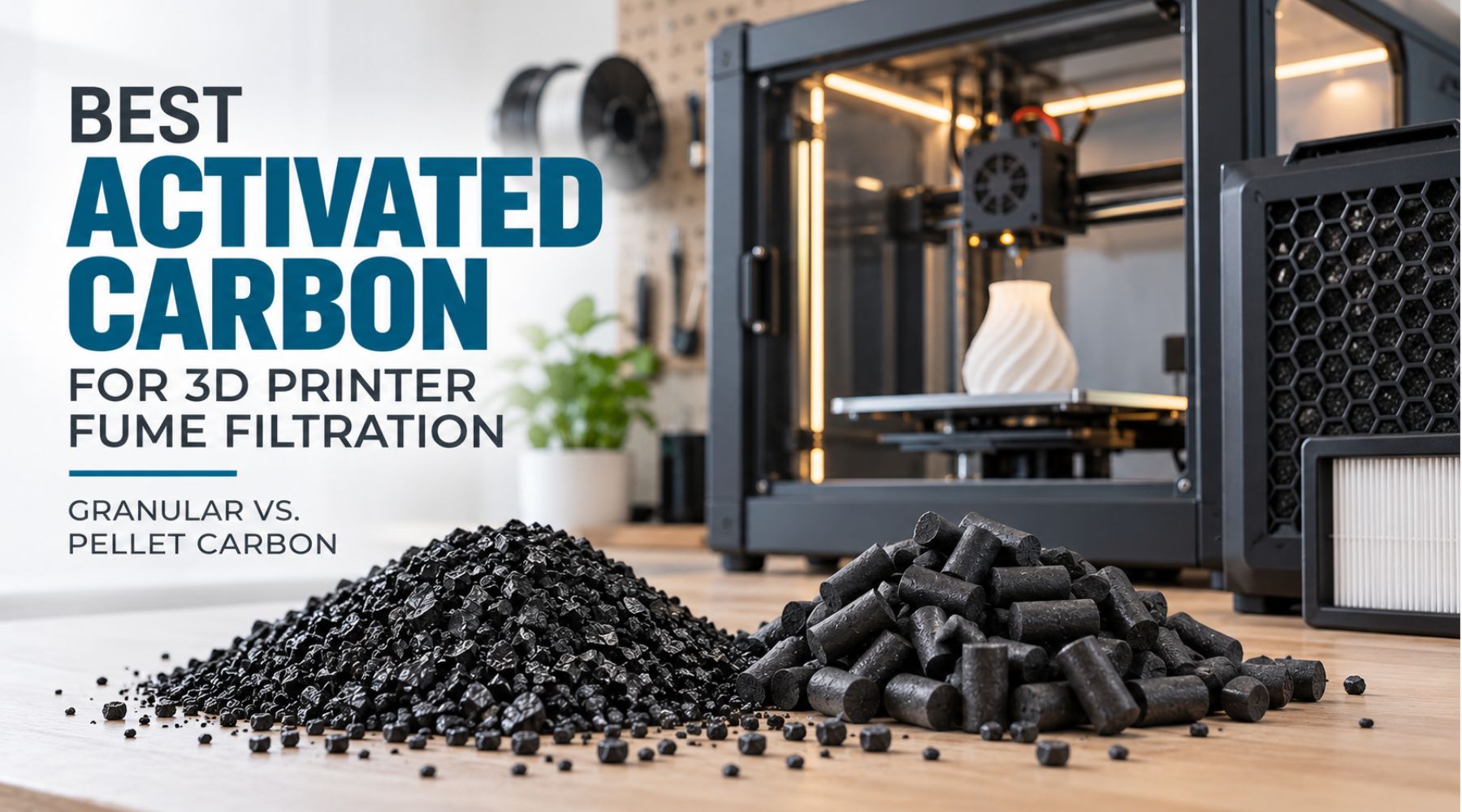
Activated Carbon Depot’s acid-free activated carbon is loose replacement media for compatible 3D printer enclosure filters, DIY carbon cartridges, and laser fume filtration systems. Choose 4×8 mesh coconut-shell granular activated carbon or 4mm coal-based activated carbon pellets to match your filter’s media requirements.
This thermally activated carbon provides a porous surface that adsorbs certain gas-phase volatile organic compounds (VOCs) and odor-causing molecules as air passes through the carbon bed. Performance depends on the compounds present, carbon quantity, airflow, contact time, humidity, and filter design.
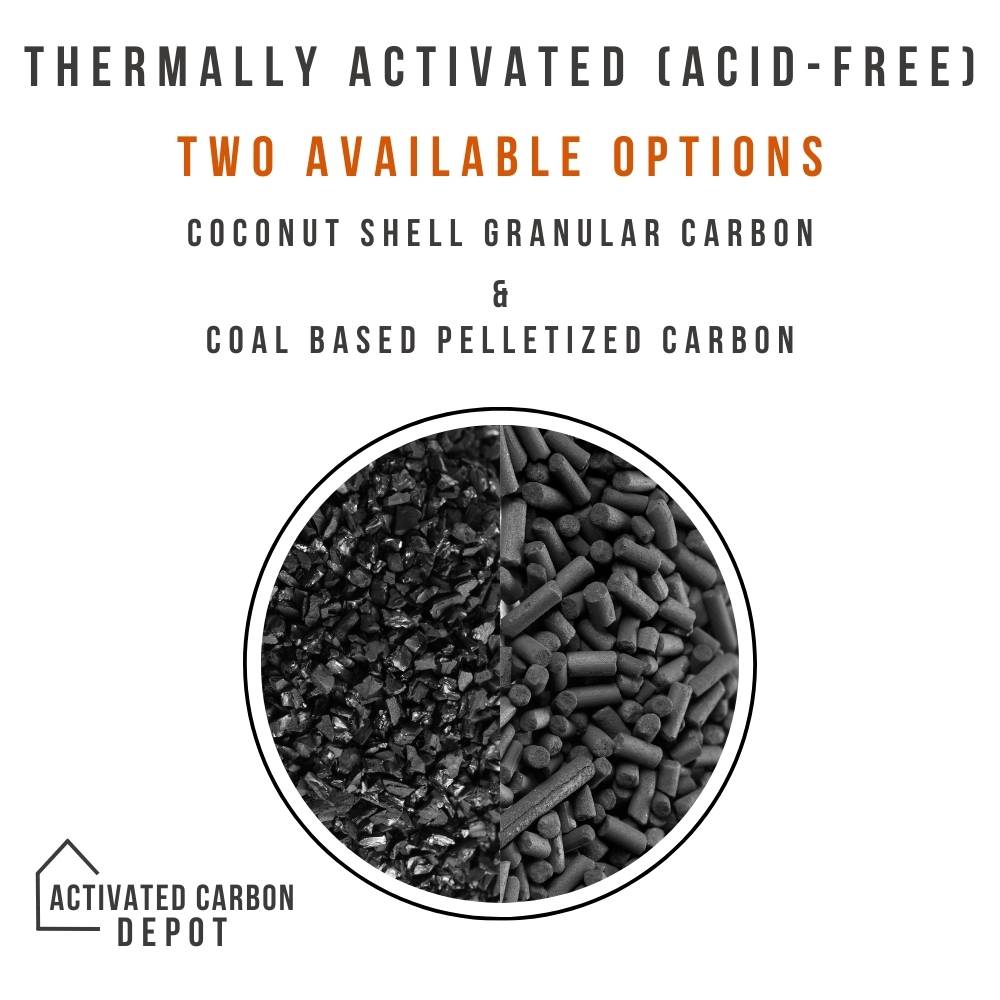
Choose 4×8 Granular Carbon or 4mm Pellets
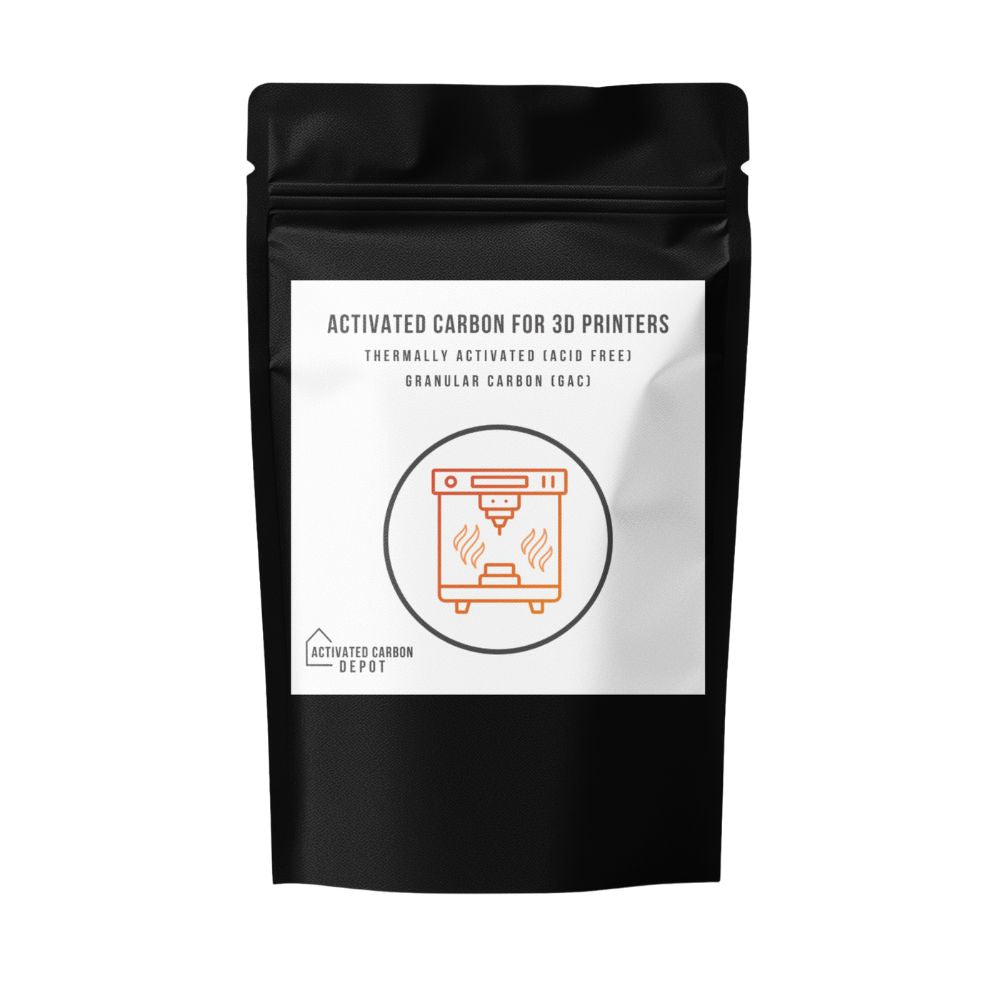
4×8 Mesh Coconut-Shell Granular Activated Carbon
The granular option consists of irregular coconut-shell activated carbon particles graded to 4×8 mesh. Choose this option when your filter specifies granular media of this size and has suitable screens or other retention features to keep the granules contained.
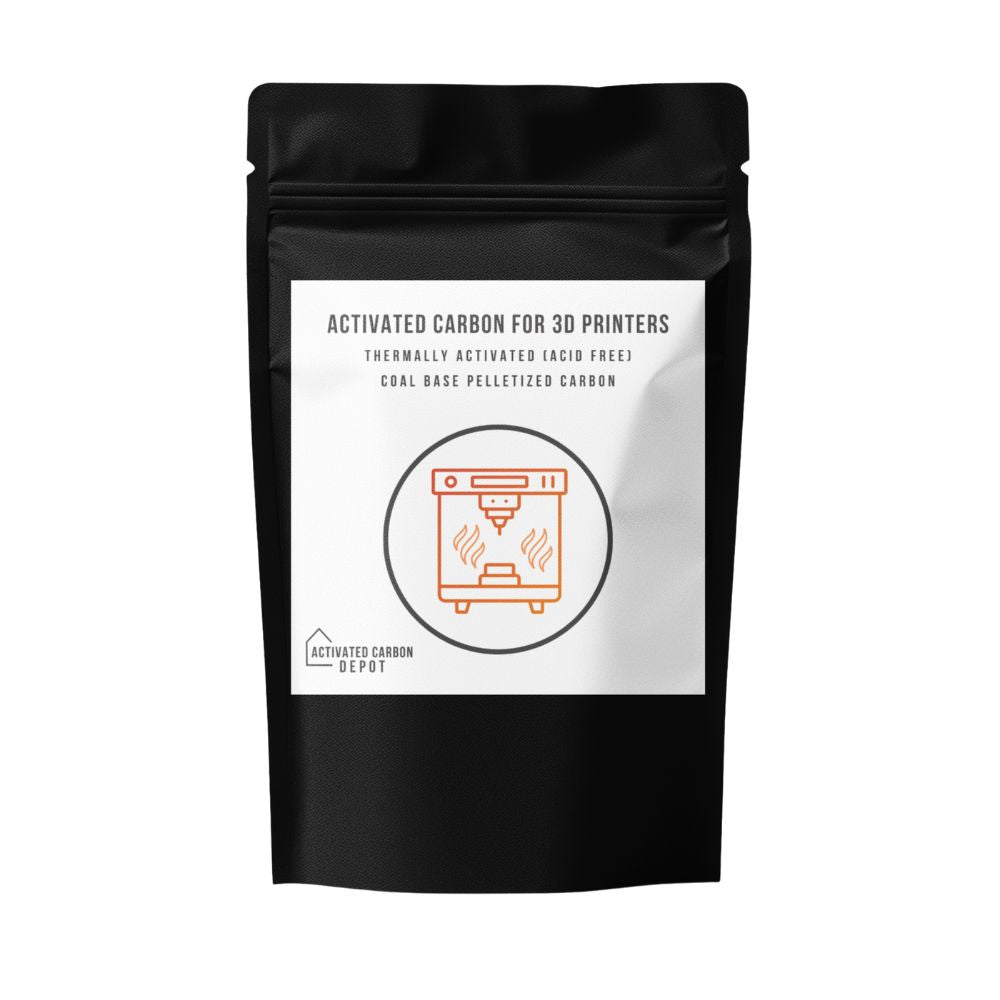
4mm Coal-Based Activated Carbon Pellets
The pellet option consists of cylindrical coal-based activated carbon with a nominal diameter of 4mm. Choose this option when your cartridge specifies pelletized media and can accommodate the pellet dimensions while maintaining the required airflow.
Granular carbon and pellets are not automatically interchangeable in every filter. Check the cartridge instructions, retention openings, available media volume, and fan requirements before selecting a carbon type.
Why Choose Acid-Free Activated Carbon for 3D Printer Filters?
Carbon selection matters when a filter operates near printer electronics, metal components, and other sensitive equipment. If your filter design specifies acid-free activated carbon, confirm that the selected grade meets its media requirements rather than choosing carbon by appearance alone.
These acid-free grades are offered for compatible printer and laser filtration applications. The designation does not replace equipment-specific compatibility requirements or guarantee that corrosion cannot occur under all operating conditions.
Gas and Odor Adsorption Within a Complete Filtration System
Activated carbon serves the gas-phase adsorption stage of a filtration system. It does not replace suitable particle filtration for smoke particles, dust, or ultrafine particles generated during printing and laser processing.
Use the media as part of an appropriately designed system with the particle filtration, enclosure, and ventilation required for your equipment and materials. Reduced odor does not establish that all emissions have been removed or that exposure levels are safe.
Check Compatibility Before Refilling
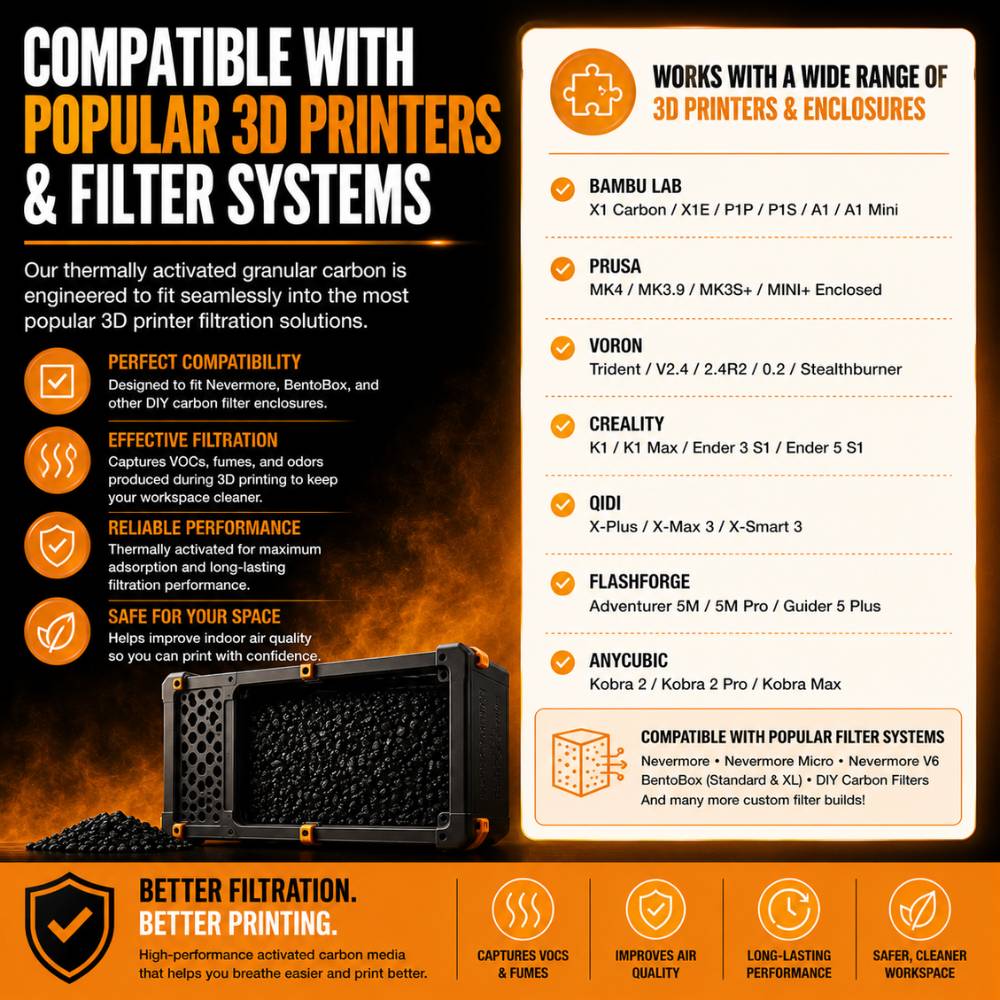
For Nevermore, BentoBox, and other refillable or DIY filter designs, check the instructions for your specific version. Cartridge dimensions, recommended media size, and required fill quantity can differ. A printer or filter brand name alone does not establish compatibility.
This product is loose carbon media, not a complete filter, fan assembly, or ready-to-install replacement cartridge.
Available Package Sizes
Both carbon types are available in 1 lb. and 6 lb. resealable bags, a 20 lb. bucket with lid, and 27.5 lb. and 55 lb. bags. Select the carbon type and package weight before adding the product to your cart.
For help choosing between granular carbon and pellets, contact Activated Carbon Depot with your filter model, required media size, and refill capacity. Volume quotes are available for larger orders.
Frequently Bought Together


Choose Your Carbon: 4×8 Granular or 4 mm Pellets
Both options are acid-free activated carbon offered for compatible gas-phase filtration systems. Select the form and size specified by your filter design, then choose the package weight needed for your refill.
| Feature | 4×8 Granular Carbon | 4 mm Pellet Carbon |
|---|---|---|
| Base material | Coconut shell | Coal |
| Particle shape | Irregular granules | Cylindrical pellets |
| Nominal sizing | 4×8 mesh | 4 mm pellet diameter; pellet length varies |
| When to select | When your cartridge specifies 4×8 granular activated carbon | When your cartridge specifies 4 mm pelletized activated carbon |
| Fit considerations | Retention screens must contain the granules and any smaller particles present | Cartridge openings must retain the pellets and any fragments present |
| Airflow considerations | Verify airflow with the selected fill depth and filter design | Verify airflow with the selected fill depth and filter design |
| Available package weights | 1, 6, 20, 27.5, and 55 lb | 1, 6, 20, 27.5, and 55 lb |
Which Option Fits My 3D Printer or Laser Filter?
Check the instructions for your exact cartridge or filter version. Confirm the recommended media type, particle size, retention openings, refill capacity, and fan requirements. A printer brand or filter family name alone does not establish compatibility.
Neither particle shape alone nor base material establishes which carbon will perform better in every application. Adsorption and airflow depend on the specific carbon grade, target compounds, bed depth, packing, and operating conditions.
Need help choosing? Contact Activated Carbon Depot with your filter model, recommended media specifications, and refill capacity.
Applications for Acid-Free Activated Carbon
Use this loose carbon media in refillable filtration systems designed to hold the selected granules or pellets and move air through the carbon bed.
3D Printer Enclosure Filters
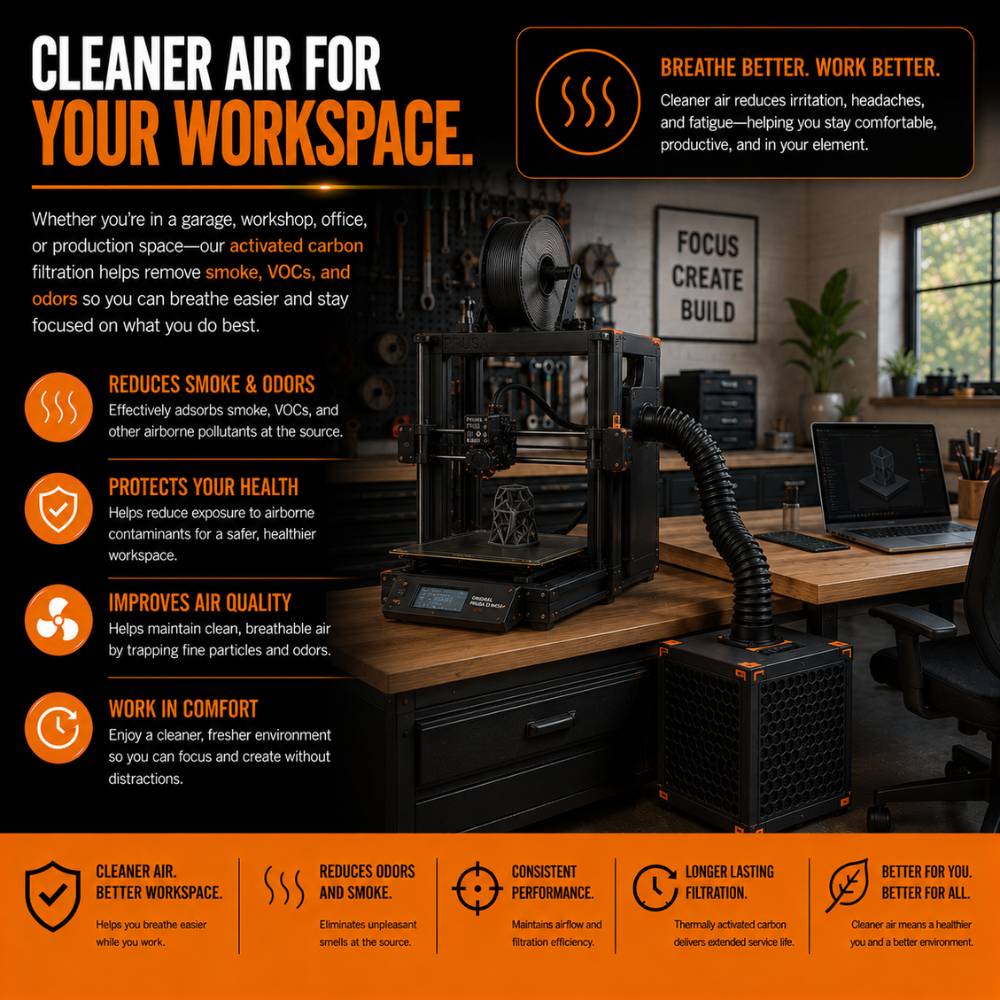
For compatible enclosure filters and refillable cartridges, activated carbon provides a gas-phase adsorption stage to help reduce certain VOCs and printing odors. Select the media size and fill quantity required by your filter design.
Laser Engraving and Cutting Filtration
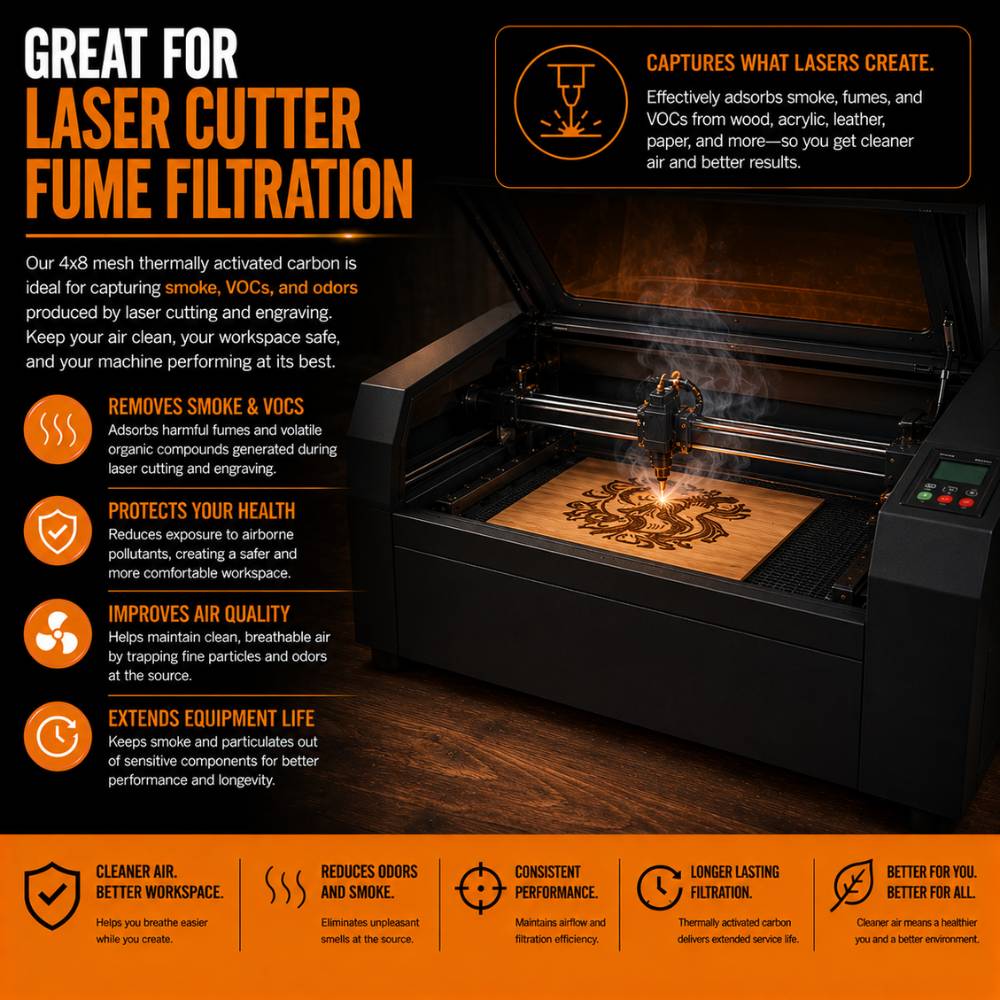
Activated carbon can serve as the gas-phase stage in a properly designed laser fume extraction system. The system must also address particles and the emissions associated with the materials being processed. Adding carbon does not make an unsuitable material safe to laser cut or engrave.
DIY Carbon Filter Cartridges
The granular and pellet options can be used in compatible DIY housings with suitable media retention, airflow, and bed depth. Follow the design’s specifications and check for gaps that allow air to bypass the carbon.
Product Features
- Acid-free activated carbon offered for compatible printer and laser filtration applications
- Thermally activated media with a porous structure for gas-phase adsorption
- Two options: 4×8 mesh coconut-shell granules or 4 mm coal-based pellets
- Loose replacement media for refillable carbon chambers
- Five package weights for individual refills or larger media requirements
What Activated Carbon Does in Your Filter
Activated carbon adsorbs certain gas molecules onto its internal surfaces as air passes through the media. Its effectiveness varies with the compounds present, carbon quantity, contact time, humidity, and operating conditions.
Use suitable particle filtration for dust, smoke particles, and ultrafine particles. Carbon media does not replace the enclosure, ventilation, exhaust, or other controls required for your equipment and materials.
Reduced odor is not proof that all contaminants have been removed. Maintain the complete filtration system and replace media according to the equipment guidance and conditions of use.
How to Refill Your Activated Carbon Filter
- Turn off the equipment and follow the filter manufacturer’s instructions for accessing the carbon chamber.
- Confirm the required media type and size before opening your replacement carbon.
- Remove the used media and inspect the housing, seals, and retention screens.
- Fill the chamber to the level or quantity specified by the filter design. Do not crush or tightly compress the media to force extra carbon into the cartridge.
- Reassemble the filter, checking that the media is contained and air cannot bypass the carbon bed.
- Check airflow according to the equipment instructions before returning the system to service.
How Much Carbon Do You Need?
Use the refill capacity specified for your exact cartridge or filter version. Different Nevermore, BentoBox, and DIY designs can have different chamber volumes and media requirements.
If the instructions specify a fill volume, do not assume that granular carbon and pellets will require the same weight. Bulk density and packing affect how much media fits in the chamber.
Contact Activated Carbon Depot with your filter model, chamber capacity, and selected carbon type if you need help choosing a package size.
When to Replace Activated Carbon
Activated carbon has a finite adsorption capacity. Service life depends on operating hours, the materials being processed, contaminant concentrations, humidity, carbon quantity, airflow, and filter design.
There is no single replacement interval that applies to every printer, laser, or carbon cartridge. Follow the equipment manufacturer’s maintenance guidance and establish a replacement schedule appropriate to your use.
Returning odors may indicate that maintenance is needed, but odor alone is not a reliable measure of remaining capacity or safe air quality. Reduced airflow also requires inspection of the complete system, including particle filters and possible obstructions.
Handling and Storage
Handle the carbon gently to minimize dust and pellet breakage. Avoid breathing dust and follow the product safety data sheet for handling precautions.
Keep unused media tightly sealed in a dry location, away from solvents, fumes, and strong odors. Open carbon can adsorb substances from the surrounding air before it is installed.
Dispose of used media according to the substances it has collected and applicable disposal requirements. Used carbon should not automatically be treated as equivalent to unused carbon.
Acid-Free Activated Carbon FAQs
This loose replacement media is offered for compatible 3D printer enclosure filters, refillable carbon cartridges, and laser fume filtration systems. It adsorbs certain gas-phase VOCs and odor-causing compounds as air passes through the carbon bed.
Choose 4×8 mesh coconut-shell granular activated carbon or 4 mm coal-based activated carbon pellets. Match the media type and size to your filter’s requirements.
Choose the option specified by your cartridge or filter design. Check particle size, retention openings, refill capacity, and airflow requirements. Neither shape alone establishes which carbon will perform better in every application.
Some printer filter designs specify acid-free activated carbon because the media operates near metal parts and electronics. Follow your filter’s media requirements. The acid-free designation alone does not guarantee corrosion-free operation under every condition.
No. Thermal activation describes how the carbon’s pore structure is developed. It does not, by itself, establish the finished media’s acidity or whether additional processing occurred. These are separate product characteristics.
Compatibility depends on the specific filter version. Check its required media size, cartridge openings, fill capacity, and fan requirements before ordering. Different designs within the same filter family can use different quantities or media.
Check the requirements of the actual filter installed in your printer. Loose carbon is suitable only for cartridges or chambers designed to accept refill media. A printer brand name alone does not establish compatibility.
The carbon provides gas-phase adsorption. Use appropriate particle filtration for smoke particles, dust, and ultrafine particles. A complete system may require both carbon and particle filters, along with suitable ventilation.
No. Adsorption varies by compound and operating conditions. Carbon quantity, contact time, humidity, and system design affect performance. This media is not a universal treatment for every gas or emission.
It can serve as the gas-phase stage in compatible laser filtration systems. Follow the equipment manufacturer’s requirements for the material being processed, particle filtration, and exhaust. Adding carbon does not make an unsuitable material safe to laser cut or engrave.
Use the capacity specified for your exact filter version. If capacity is given by volume, the required weight can differ between granular carbon and pellets because their bulk densities and packing differ.
There is no universal replacement interval. Service life depends on operating hours, emissions, humidity, carbon quantity, airflow, and filter design. Follow the equipment’s maintenance guidance and establish a schedule appropriate to your use.
No. Some contaminants have little odor, and odor perception varies. Reduced smell does not confirm that all emissions have been removed or that exposure levels are safe.
No. This product contains loose activated carbon media in the selected form and package weight. It does not include a filter housing, fan, particle filter, or complete cartridge.
Both carbon options are available in 1 lb. and 6 lb. resealable bags, a 20 lb. bucket with lid, and 27.5 lb. and 55 lb. bags.
Our activated carbon is low dust, but it is not completely dust-free. Handling and shipping can produce small amounts of fines or fragments. Handle the media gently and use suitable retention screens to keep it contained within your filter.
Keep it tightly sealed in a dry location away from solvents, fumes, and strong odors. Exposed carbon can adsorb substances from the surrounding air before installation.
Yes. Contact Activated Carbon Depot with the carbon type, quantity, and delivery requirements for a volume quote.