How to Choose the Right Activated Carbon for Your Application
Choosing activated carbon is not simply a matter of finding the product with the highest iodine number, smallest particle size, or largest surface area. Different activated carbons are engineered for different applications, contaminants, operating conditions, and filtration systems.
At Activated Carbon Depot, we supply activated carbon for applications ranging from drinking water and industrial water treatment to VOC adsorption, odor control, chemical processing, environmental remediation, air purification, and specialized filtration systems. One of the most important principles we can share with buyers is simple: the right activated carbon is the carbon that matches your application and treatment system. Learn more about bulk carbon with our Bulk Activated Carbon: The Complete Buyer's Guide.
That means carbon selection should begin with the problem you are trying to solve—not with an individual specification on a product data sheet.
This guide provides a practical step-by-step process for selecting activated carbon by treatment phase, target contaminant, carbon form, raw material, particle size, adsorption characteristics, flow requirements, contact time, and other technical considerations.
Quick Answer: How Do You Choose the Right Activated Carbon?
To choose activated carbon, first determine whether you are treating a liquid or gas, identify the contaminant you want to adsorb, understand the operating requirements of your treatment system, and then compare carbon form, raw material, particle size, pore structure, adsorption characteristics, and physical specifications.
A useful activated carbon selection process is:
- Identify the application.
- Determine whether treatment is liquid phase or vapor phase.
- Identify the target contaminant or contaminant group.
- Choose an appropriate carbon form: GAC, pellets, or PAC.
- Evaluate coconut shell, coal, wood, catalytic, impregnated, or other specialty carbons.
- Select an appropriate particle size or pellet diameter.
- Evaluate adsorption specifications and pore structure.
- Evaluate physical properties such as hardness, density, ash, and moisture.
- Confirm flow rate, contact time, pressure drop, and equipment compatibility.
- Determine the required carbon quantity and packaging.
No single specification should normally be used to make the entire selection decision.
Activated Carbon Selection at a Glance
| Application | Common Carbon Starting Point | Important Considerations |
|---|---|---|
| Drinking Water | Coconut shell or other drinking-water appropriate GAC | Target contaminants, certifications, mesh size, contact time |
| Chlorine Reduction | GAC such as coconut shell carbon | Flow rate, contact time, chlorine loading |
| Chloramine Treatment | Catalytic activated carbon | Water chemistry, contact time, system design |
| Well Water | Application-specific GAC or catalytic carbon | Sulfur compounds, chlorine/chloramine, organics, water analysis |
| Municipal Water | GAC or PAC depending on treatment process | Contaminant profile, treatment objectives, process design |
| Industrial Wastewater | Application-specific GAC or PAC | Organic loading, competing contaminants, pH, pretreatment |
| PFAS Treatment | Application-specific GAC | PFAS profile, competing organics, bed design, treatment goals |
| VOC Vapor Treatment | Vapor-phase GAC or pelletized carbon | VOC chemistry, concentration, humidity, airflow, residence time |
| General Odor Control | Vapor-phase GAC, pellets, or specialty carbon | Identify odor-causing compounds before final media selection |
| Hydrogen Sulfide | Catalytic, impregnated, or application-specific carbon | H₂S concentration, humidity, oxygen, contact time |
| Solvent Vapor Recovery | High-activity vapor-phase carbon | Solvent chemistry, concentration, recovery process, regeneration |
| Decolorization | Often PAC, including wood-based or specialty grades | Molecular size, process chemistry, purity requirements |
This table provides starting points rather than universal specifications. Final carbon selection should account for contaminant chemistry, treatment objectives, operating conditions, applicable standards, and equipment requirements.
Step 1: Identify Your Activated Carbon Application
The first question should be: What are you trying to accomplish with the activated carbon?
Activated carbon is used in an extremely broad range of applications, including:
- Drinking water treatment
- Municipal water treatment
- Industrial process water
- Wastewater treatment
- Groundwater remediation
- PFAS treatment
- Air purification
- VOC adsorption
- Industrial odor control
- Hydrogen sulfide treatment
- Solvent recovery
- Chemical processing
- Food and beverage processing
- Distillation and beverage purification
- Environmental remediation
- Manufacturing processes
- Specialty filtration systems
Identifying the application immediately narrows the range of potentially appropriate activated carbons.
For example, activated carbon designed for drinking-water treatment may have very different physical and adsorption characteristics from pelletized carbon designed for industrial vapor filtration.
This is why purchasing activated carbon based solely on price or one technical specification can lead to poor media selection.
Step 2: Determine Whether You Need Liquid-Phase or Vapor-Phase Carbon
One of the most important distinctions in activated carbon selection is whether the carbon will treat a liquid stream or a gas stream.
Liquid-Phase Activated Carbon
Liquid-phase activated carbon is used when water or another liquid passes through or contacts the carbon.
Common applications include:
- Drinking water
- Municipal water
- Groundwater
- Industrial wastewater
- Process water
- Food and beverage processing
- Chemical purification
Important liquid-phase variables can include water chemistry, pH, contaminant concentration, competing organic compounds, particle size, hydraulic loading, bed depth, and empty bed contact time.
Vapor-Phase Activated Carbon
Vapor-phase activated carbon is used to treat contaminated air, gas, or vapor streams.
Common applications include:
- VOC adsorption
- Industrial odor control
- Air purification
- Solvent vapor treatment
- Vapor recovery
- Manufacturing exhaust
- Fuel vapor systems
- Specialty fume filtration
Vapor-phase systems place additional emphasis on variables such as airflow, pressure drop, relative humidity, gas temperature, carbon-bed depth, residence time, and contaminant concentration.
A carbon that performs well in a liquid-phase system should not automatically be assumed to be the best media for a vapor-phase system.
Step 3: Identify the Target Contaminant
After identifying the treatment phase, determine what you actually want the carbon to adsorb.
This is one of the most important steps in carbon selection.
Broad objectives such as "clean the water," "remove VOCs," or "control odor" may not provide enough information for technical media selection.
Whenever possible, identify individual compounds or contaminant groups.
Examples might include:
- Chlorine
- Chloramine
- Specific VOCs
- Selected PFAS compounds
- Hydrogen sulfide
- Organic color compounds
- Taste and odor compounds
- Solvent vapors
- Specific industrial organic contaminants
Activated carbon does not adsorb every chemical equally.
Molecular size, molecular structure, polarity, solubility, concentration, temperature, competing compounds, and carbon pore structure can all influence adsorption behavior.
Why Pore Structure Matters
Activated carbon contains an enormous internal network of pores. Those pores provide the surface on which adsorption occurs.
They are generally discussed in categories such as micropores, mesopores, and macropores.
The relative distribution of those pore sizes matters because contaminants vary in molecular dimensions.
A carbon containing extensive micropore volume may perform very well for certain smaller molecules, while applications involving larger molecules may benefit from a different pore-size distribution.
This explains why total surface area alone does not tell the complete story.
The useful surface area is the surface that the target molecules can effectively access under the treatment conditions.
Step 4: Choose Between GAC, Pelletized Carbon and PAC
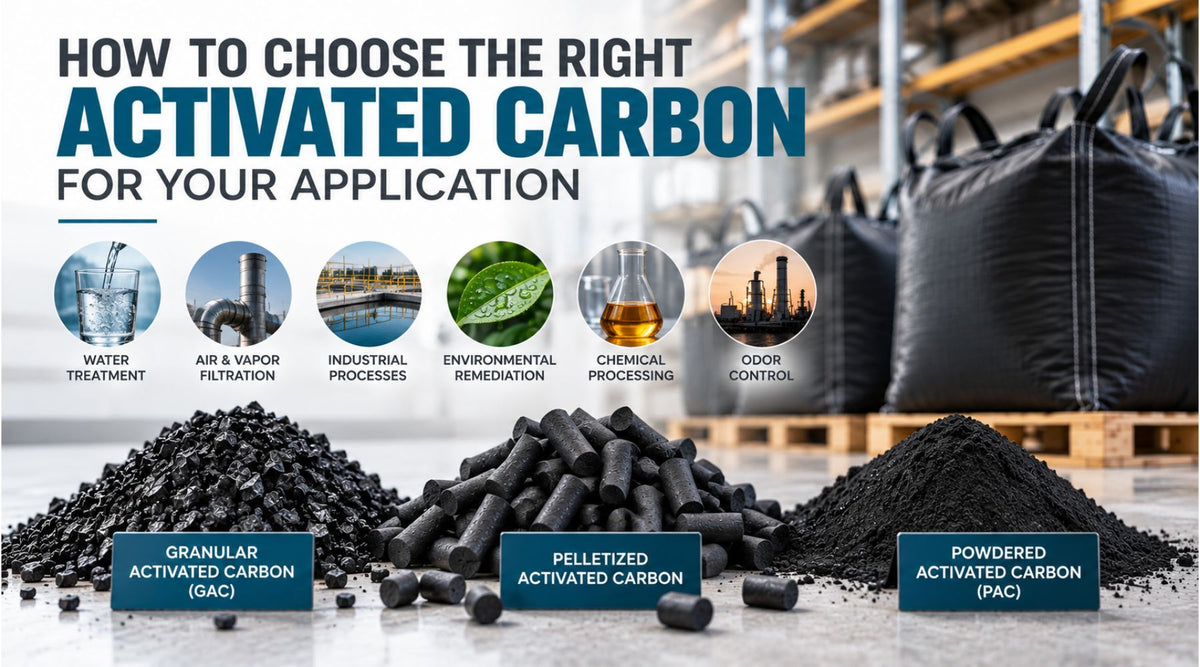
Activated carbon is available in several physical forms. Three of the most important are granular activated carbon (GAC), pelletized activated carbon, and powdered activated carbon (PAC).
Granular Activated Carbon
GAC consists of irregular carbon particles commonly used in fixed-bed treatment systems.
GAC is particularly common in:
- Water filtration
- Municipal treatment
- Industrial treatment vessels
- Groundwater remediation
- Wastewater polishing
- Certain vapor-phase systems
Granular carbon is available in multiple particle-size ranges, allowing engineers and system operators to balance adsorption characteristics with pressure drop and hydraulic performance.
Pelletized Activated Carbon
Pelletized carbon consists of relatively uniform cylindrical particles.
It is especially common in air and vapor treatment because the pellet geometry can provide favorable airflow characteristics and relatively low pressure drop in properly designed carbon beds.
Pelletized carbon is commonly considered for:
- VOC treatment
- Industrial air purification
- Odor control
- Solvent vapor adsorption
- Manufacturing exhaust
- Specialty vapor filtration
Powdered Activated Carbon
PAC contains much smaller particles and is commonly dosed directly into a treatment process rather than used as a conventional permanent fixed bed.
Applications can include:
- Municipal water treatment
- Wastewater treatment
- Emergency contaminant response
- Decolorization
- Chemical processing
- Food and beverage processes
The treatment process must include an appropriate method for separating the powdered carbon after use.
GAC vs. Pellets vs. PAC: Quick Comparison
| Carbon Form | Typical Strength | Common Applications |
|---|---|---|
| GAC | Fixed-bed adsorption with multiple particle sizes available | Water, wastewater, remediation, process treatment, some vapor systems |
| Pellets | Uniform geometry and favorable airflow characteristics | Air, vapor, VOC and odor treatment |
| PAC | Fine particles suitable for dosing into treatment processes | Municipal treatment, wastewater, chemical processing, decolorization |
Step 5: Choose the Activated Carbon Raw Material
Activated carbon can be manufactured from several carbon-rich raw materials. Three of the most common are coconut shell, coal, and wood.
The raw material influences the carbon's pore structure and physical characteristics, although final performance also depends heavily on activation conditions and manufacturing specifications.
Coconut Shell Activated Carbon
Coconut shell activated carbon is generally associated with a highly developed microporous structure and high mechanical hardness.
Common applications include:
- Drinking water
- Municipal water treatment
- Point-of-use filtration
- Food and beverage processing
- Distilleries
- Vapor filtration
- VOC adsorption
- Specialty purification
Its microporous structure can make coconut shell carbon particularly useful for adsorption of certain smaller molecules.
Coal-Based Activated Carbon
Coal-based activated carbon can provide a broader distribution of pore sizes depending on the coal source and activation process.
Common applications include:
- Municipal water
- Industrial water treatment
- Wastewater
- Groundwater remediation
- Air purification
- Industrial odor control
- Vapor treatment
Coal carbon is available in granular, pelletized, and powdered forms depending on the product.
Wood-Based Activated Carbon
Wood-based activated carbon is commonly associated with more developed mesoporous and macroporous characteristics and is frequently available as powdered activated carbon.
Potential applications include:
- Decolorization
- Chemical processing
- Food and beverage purification
- Wastewater treatment
- Applications involving relatively larger molecules
These are general characteristics. Raw material should never be treated as the only predictor of activated carbon performance.
Coconut Shell vs. Coal vs. Wood Activated Carbon
| Characteristic | Coconut Shell | Coal | Wood |
|---|---|---|---|
| Typical Pore Tendency | More microporous | Broader pore distribution | More meso/macroporous |
| Mechanical Hardness | Generally high | Generally good, grade dependent | Product dependent |
| Common Forms | GAC, pellets, PAC | GAC, pellets, PAC | Often PAC |
| Common Uses | Water, vapor, purification | Water, wastewater, air, industrial treatment | Decolorization and specialty processing |
Our next dedicated article in this series will explore Coconut Shell vs. Coal vs. Wood Activated Carbon in considerably more detail.
Step 6: Determine Whether You Need Standard, Catalytic or Impregnated Activated Carbon
Some contaminants require more than conventional physical adsorption.
Specialty activated carbons can be modified to improve performance for particular chemical reactions or contaminant groups.
Catalytic Activated Carbon
Catalytic activated carbon has enhanced surface characteristics that promote certain chemical reactions in addition to conventional adsorption.
Depending on the carbon and application, catalytic carbon can be used for treatment objectives involving compounds such as chloramine or hydrogen sulfide.
The appropriate catalytic carbon depends on the treatment phase, contaminant, concentration, water or gas chemistry, and operating conditions.
Impregnated Activated Carbon
Impregnated activated carbon incorporates selected chemicals into or onto the carbon to improve treatment of particular contaminants.
Impregnated media can be used in specialized gas-treatment applications where conventional activated carbon may have limited capacity.
The impregnant must be selected specifically for the contaminant and operating environment.
Step 7: Select the Right Activated Carbon Particle Size
Particle size has a major influence on how activated carbon behaves inside a treatment system.
Granular carbon is commonly classified using mesh sizes such as:
- 4×8
- 6×12
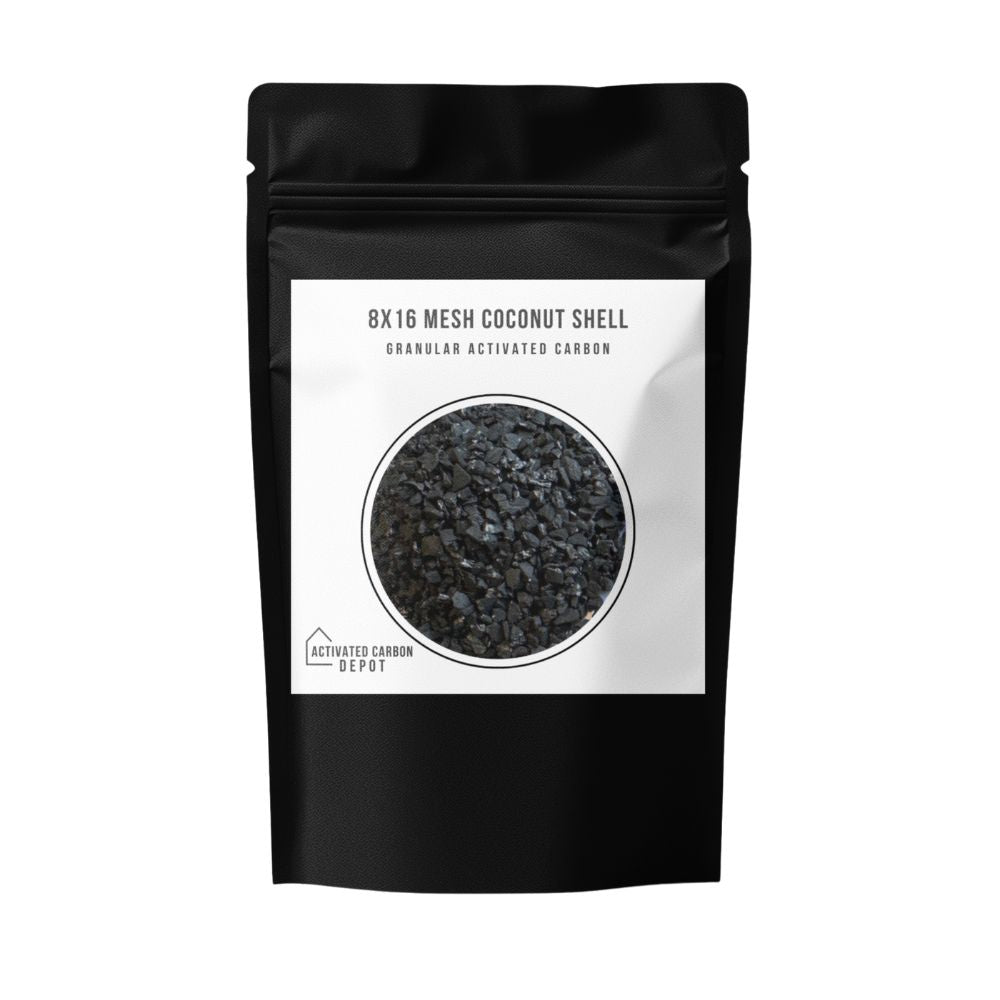
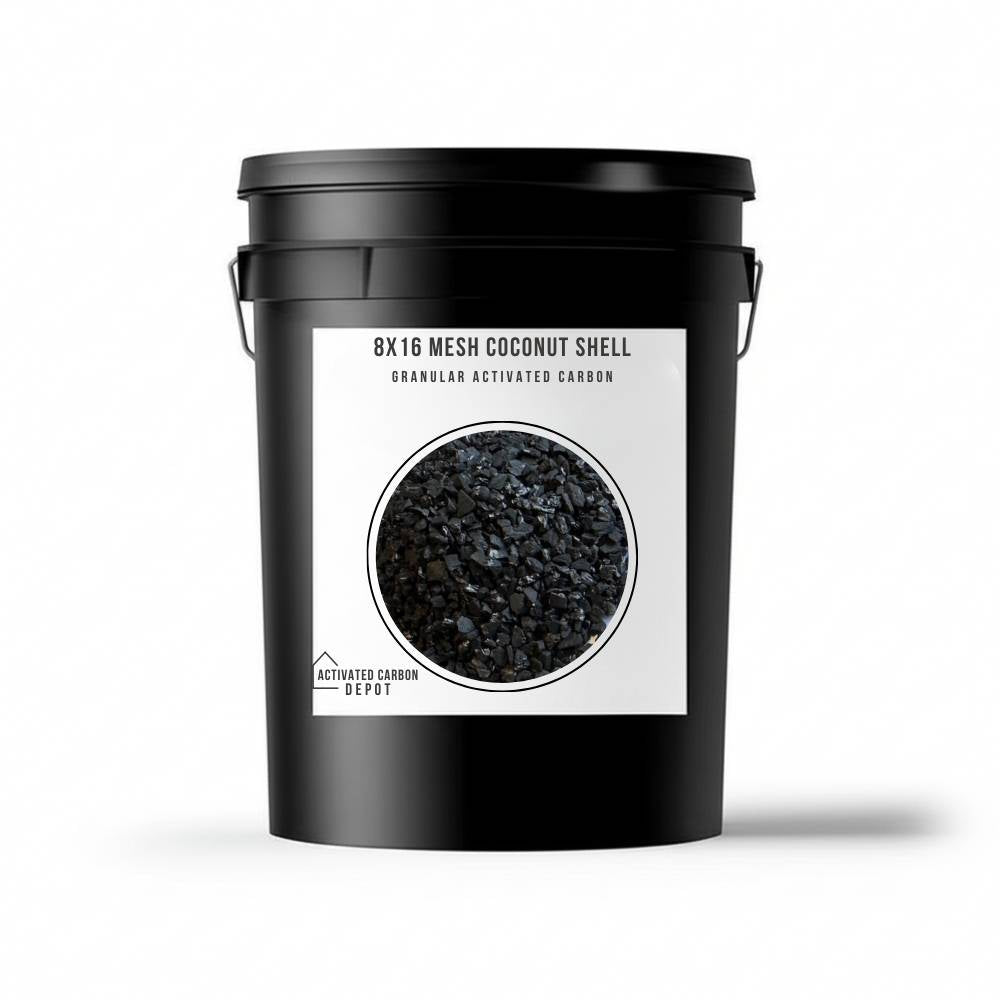
- 8×16
- 8×30
- 12×40
Lower mesh numbers correspond to larger screen openings, meaning a 4×8 carbon contains substantially larger particles than a 12×40 carbon.
Smaller Activated Carbon Particles
Smaller particles can provide shorter diffusion paths and potentially faster mass-transfer characteristics, but they generally create greater resistance to fluid flow.
Larger Activated Carbon Particles
Larger particles generally provide lower pressure drop but may exhibit different mass-transfer characteristics.
The general design tradeoff is:
Smaller particles → potentially faster adsorption kinetics + greater pressure drop
Larger particles → lower pressure drop + different mass-transfer characteristics
This is why particle size should be matched to the filtration system rather than selected solely according to adsorption potential.
Step 8: Understand Iodine Number
Iodine number is one of the most frequently referenced activated carbon specifications.
It is typically reported in milligrams per gram (mg/g) and is commonly used as an indicator related to micropore development and adsorption capacity for relatively small molecules under the specified test conditions.
You may encounter carbon specifications such as 800, 900, 1,000, or 1,100+ mg/g iodine.
However, a higher iodine number does not automatically mean better performance for every contaminant.
Iodine number is useful when interpreted alongside pore-size distribution, carbon type, contaminant characteristics, and the other specifications relevant to the application.
Step 9: Understand CTC Activity for Vapor-Phase Carbon
CTC activity, historically based on carbon tetrachloride adsorption, is a specification commonly associated with certain vapor-phase activated carbons.
You may encounter vapor carbons described using values such as 50 CTC, 60 CTC, or 70 CTC.
CTC activity can provide useful comparative information about adsorption characteristics under the applicable test conditions, but—like iodine number—it should not be treated as a complete measure of how a carbon will perform against every VOC.
Target compound chemistry, concentration, humidity, temperature, contact time, and carbon-bed design remain important.
Step 10: Evaluate Hardness, Density, Ash and Moisture
Adsorption specifications receive much of the attention, but physical specifications can have a significant impact on carbon handling and system operation.
Hardness
Hardness indicates resistance to physical breakdown and abrasion.
High mechanical strength can be important when carbon experiences shipping, handling, backwashing, bed movement, or repeated operating cycles.
Apparent Density
Apparent density indicates how much carbon mass occupies a given bulk volume.
This becomes important when determining how many pounds of carbon are required to fill a treatment vessel.
A vessel is sized by volume, while carbon is frequently purchased by weight. Apparent density helps connect those two measurements.
Ash
Ash represents inorganic material remaining in the activated carbon. Acceptable ash levels depend on the carbon grade and application.
Moisture
Moisture indicates the water present in the carbon as supplied and should be considered when comparing product specifications and delivered carbon weight.
Step 11: Consider Contact Time
Activated carbon needs sufficient opportunity to interact with contaminants.
For fixed-bed liquid treatment systems, one commonly used design concept is Empty Bed Contact Time (EBCT).
EBCT represents the theoretical time required for the liquid flow to pass through a volume equal to the carbon bed volume.
Contact time can influence adsorption performance, but longer is not automatically sufficient to solve every treatment problem. Carbon selection, contaminant concentration, mass transfer, bed depth, flow distribution, and other system variables also matter.
Vapor-phase systems similarly require appropriate residence time between the contaminated gas stream and carbon bed.
Step 12: Consider Pressure Drop and Flow Rate
A carbon can have excellent adsorption characteristics and still perform poorly if it is incompatible with the treatment equipment.
Water must move through liquid-phase beds without creating unacceptable hydraulic resistance.
Fans and blowers must move gas through vapor-phase beds while overcoming the pressure drop generated by the carbon.
Pressure drop is influenced by variables such as:
- Particle size
- Carbon-bed depth
- Flow velocity
- Carbon shape
- Fines
- Bed compaction
- System geometry
This is why simply increasing carbon-bed depth or choosing increasingly fine carbon can have unintended consequences.
Step 13: Consider Competing Contaminants
Real treatment streams rarely contain only one compound.
Water may contain natural organic matter and multiple contaminants. Industrial air may contain several VOCs. Wastewater can contain an extremely complex mixture of organic and inorganic compounds.
These compounds can compete for adsorption sites.
A carbon that performs exceptionally against an isolated contaminant under laboratory conditions may behave differently when exposed to a complex real-world stream.
For demanding industrial applications, representative testing or pilot studies may be appropriate before committing to a large-scale carbon system.
Step 14: Determine How Much Activated Carbon You Need
Carbon quantity should be determined from the treatment system rather than an arbitrary rule such as pounds per gallon or pounds per CFM.
Important variables include:
- Carbon-bed volume
- Apparent density
- Vessel dimensions
- Flow rate
- Bed depth
- Target contact time
- Contaminant concentration
- Desired treatment level
- Expected carbon service life
This is another reason apparent density is important. Once the required bed volume is known, density helps estimate the corresponding carbon mass.
We'll cover this topic separately in our upcoming guide, How Much Activated Carbon Do I Need?
Step 15: Choose the Right Activated Carbon Packaging
Once the carbon itself has been selected, determine how much material the operation requires and how it should be delivered.
Depending on the Activated Carbon Depot product, available quantities may include:
- Individual bags
- Pallet quantities
- Bulk commercial quantities
- 1,100 lb super sacks
Smaller commercial systems may be easier to service with individual bags, while industrial treatment vessels may benefit from pallet or super-sack quantities.
Facilities receiving super sacks should have appropriate material-handling equipment and loading procedures.
Common Activated Carbon Selection Mistakes
Choosing Carbon Only by Iodine Number
Iodine number is useful, but it primarily provides information related to micropore characteristics under a standardized test. It does not describe every aspect of carbon performance.
Assuming the Highest Surface Area Is Always Best
Total surface area matters only when target contaminant molecules can effectively access the relevant pore structure.
Ignoring Particle Size
Particle size affects both adsorption kinetics and pressure drop.
Using Liquid-Phase Carbon Without Considering Vapor Requirements
Liquid and vapor systems operate under different conditions and may require different physical characteristics.
Buying Carbon Before Identifying the Contaminant
"Odor," "dirty water," and "VOCs" can describe very different treatment problems. Identifying specific contaminants improves media selection.
Ignoring System Design
Even an appropriate carbon can perform poorly if contact time, flow distribution, bed depth, or pressure drop are inadequate.
Activated Carbon Selection Checklist
Before purchasing activated carbon, gather as much of the following information as possible:
- Application
- Liquid or vapor phase
- Target contaminants
- Influent contaminant concentrations
- Desired effluent or outlet concentrations
- Flow rate
- Operating temperature
- pH for liquid systems
- Humidity for vapor systems
- Existing vessel or filter dimensions
- Required carbon-bed depth
- Current carbon specification, if replacing media
- Preferred particle size
- Required certifications or regulatory considerations
- Estimated carbon quantity
- Packaging and receiving requirements
The more information available, the easier it becomes to narrow the selection to an appropriate carbon.
Frequently Asked Questions About Choosing Activated Carbon
What type of activated carbon should I use?
The appropriate activated carbon depends on your application, treatment phase, target contaminants, equipment, flow conditions, required contact time, and other operating requirements. Start by determining whether the system is liquid phase or vapor phase and identifying the compounds you need to adsorb.
Is coconut shell activated carbon better than coal activated carbon?
Not universally. Coconut shell carbon generally has a highly developed microporous structure and high hardness, while coal-based carbon can provide a broader pore-size distribution. Either may be preferable depending on the contaminant and treatment conditions.
What is the best activated carbon for water filtration?
The answer depends on the water chemistry and treatment objective. Coconut shell GAC is widely used for drinking-water and purification applications, while coal-based GAC, catalytic carbon, and PAC are also important in water treatment. Specific contaminants and applicable standards should determine the final selection.
What is the best activated carbon for air filtration?
Vapor-phase GAC and pelletized activated carbon are commonly used for air treatment. The appropriate carbon depends on the gases or vapors being treated, concentration, humidity, airflow, contact time, and filter design. Specialty or impregnated carbon may be required for certain compounds.
Is granular or pellet activated carbon better?
Neither is universally better. GAC is widely used in water and some vapor systems, while pelletized carbon can offer favorable airflow and pressure-drop characteristics for gas-phase treatment. System design should determine the appropriate form.
Does higher iodine number mean better activated carbon?
No. A higher iodine number can indicate greater micropore development, but it does not guarantee better performance against every contaminant. Pore-size distribution and contaminant chemistry are also important.
What mesh size activated carbon should I use?
The appropriate mesh size depends on the treatment system. Finer particles can provide faster mass-transfer characteristics but generally create higher pressure drop. Coarser particles typically reduce pressure drop but provide different adsorption kinetics.
Can one activated carbon remove everything?
No. Activated carbon is highly versatile, but it is not a universal adsorbent for every contaminant. Some compounds adsorb readily, others require specialty carbon, and some may be better treated using an entirely different technology.
Choosing Activated Carbon From Activated Carbon Depot
At Activated Carbon Depot, we supply activated carbon for a wide range of liquid-phase, vapor-phase, commercial, industrial, environmental, and specialty applications.
Our selection includes granular activated carbon, pelletized carbon, powdered activated carbon, coconut shell carbon, coal-based carbon, catalytic carbon, specialty filtration media, and bulk activated carbon for customers requiring larger commercial quantities.
Rather than selecting carbon according to one specification, we recommend evaluating the entire treatment problem:
Application → Treatment Phase → Contaminant → Carbon Form → Raw Material → Pore Structure → Particle Size → Specifications → Contact Time → Flow → Quantity
That sequence provides a much stronger foundation for carbon selection than simply comparing iodine numbers or prices.
If you're sourcing activated carbon for an existing filtration system, the specifications of the current media and equipment are also valuable starting points. If you're designing a new treatment system, additional testing or engineering evaluation may be appropriate depending on the application.
Final Thoughts: Selecting the Right Activated Carbon
There is no single activated carbon that is best for every application.
The enormous variety of activated carbon products exists because contaminants, treatment streams, and filtration systems are different.
Coconut shell, coal, and wood carbons develop different pore structures. GAC, pellets, and PAC behave differently in treatment systems. Particle size influences both mass transfer and pressure drop. Iodine number and CTC activity provide useful information but do not independently predict performance against every compound.
The best activated carbon selection begins by clearly defining the treatment objective.
Identify what you are treating, what you need to adsorb, how the system operates, and what performance is required. Then use the carbon's physical and adsorption specifications to narrow the available options.
At Activated Carbon Depot, our goal is not only to provide activated carbon, but also to build the technical resources customers need to understand how different carbons work, how their specifications compare, and how to select appropriate media for real-world filtration applications.
Explore Activated Carbon for Your Application
Compare these liquid-phase, vapor-phase and powdered carbon options. Match the media to your contaminants, operating conditions and treatment equipment before purchasing.

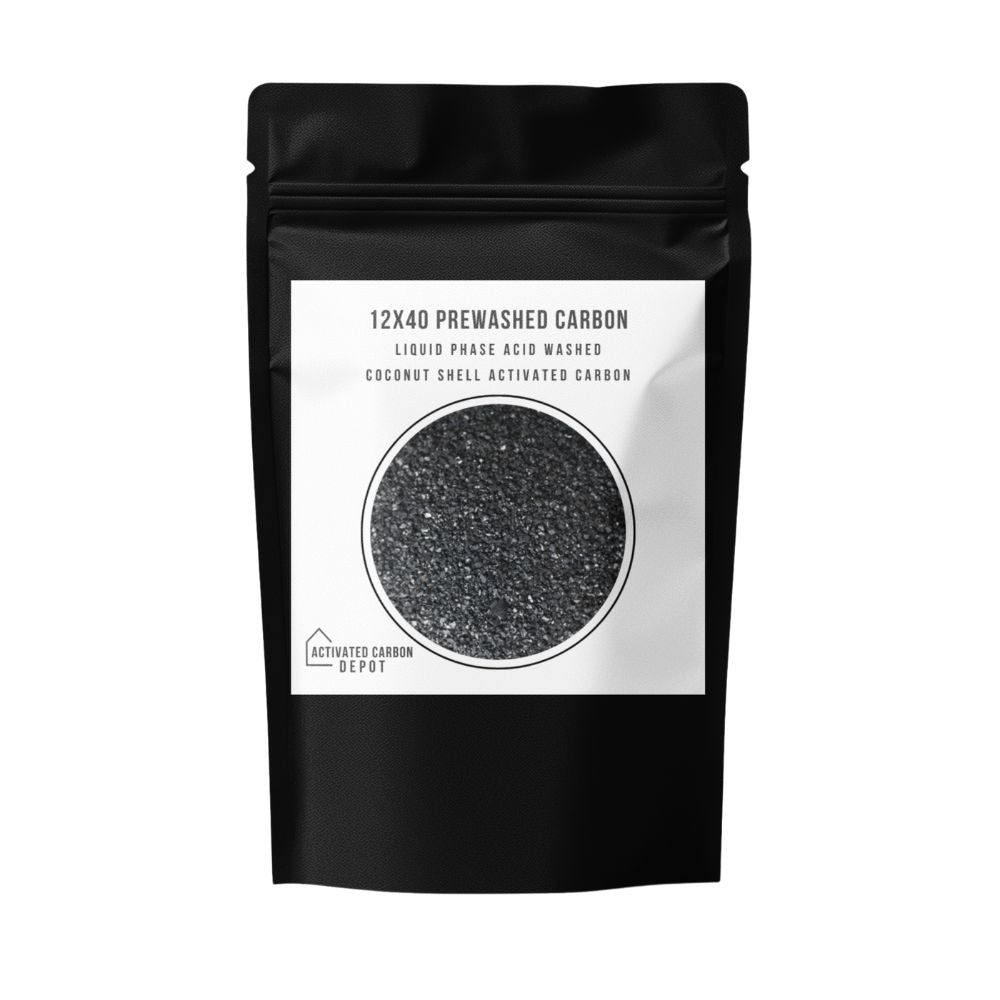
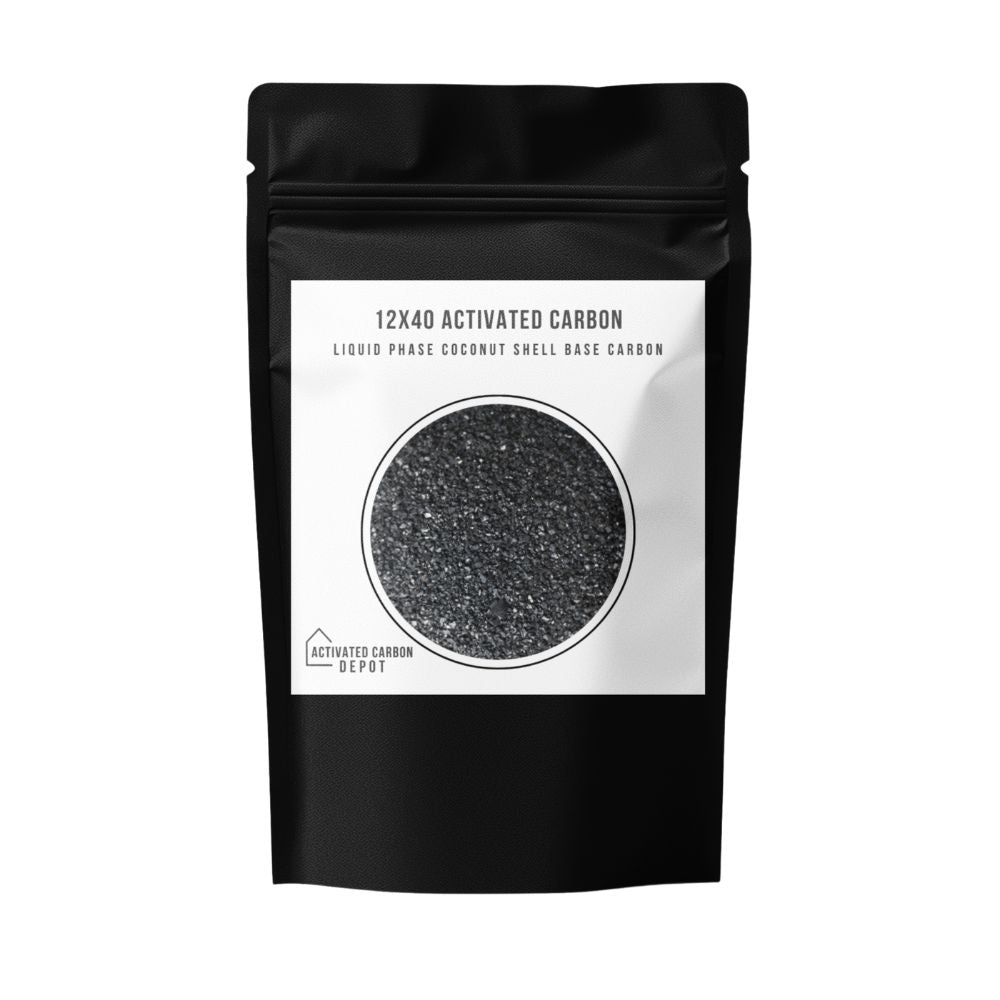
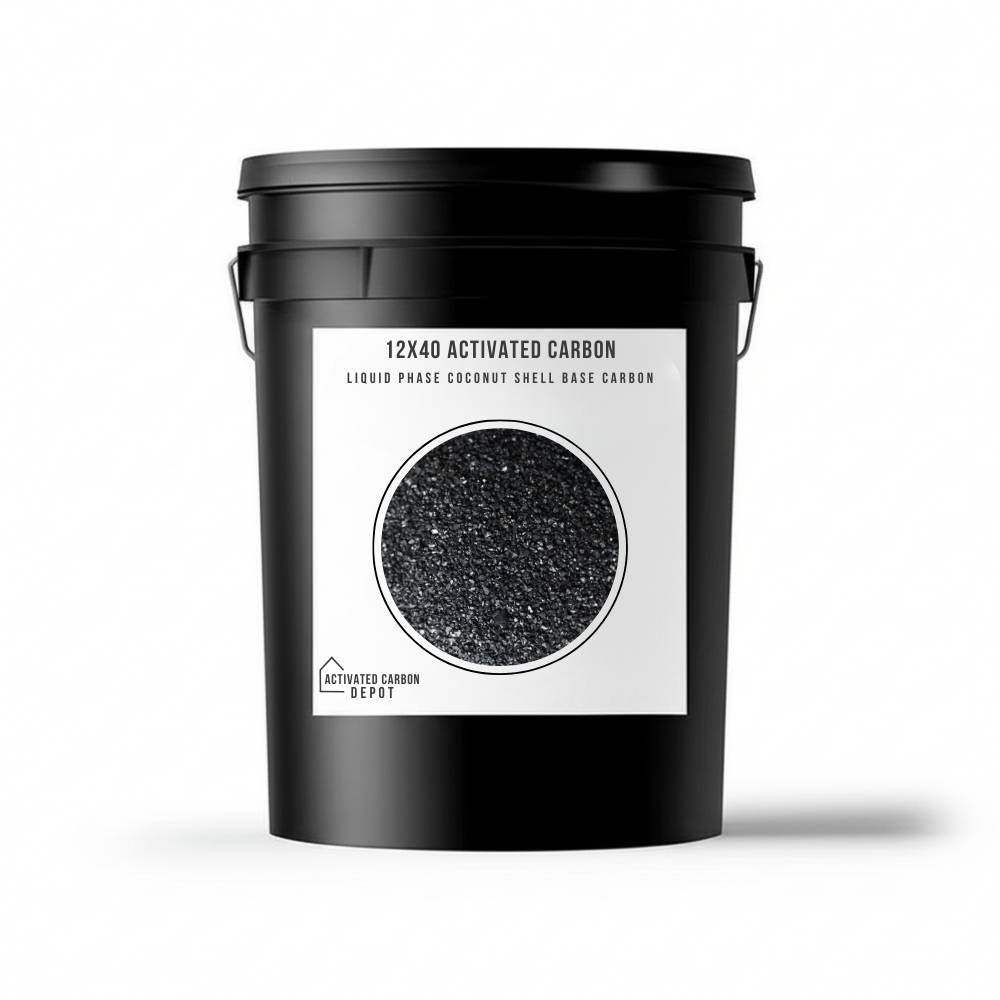
12x40 Liquid Phase Coconut Shell Activated Carbon
Coconut shell GAC for water filtration and other liquid-phase purification applications.
Shop Now
8x30 Liquid Phase Coal-Base Activated Carbon
Coal-based GAC for industrial water treatment and groundwater remediation. Not intended for drinking water.
Shop Now
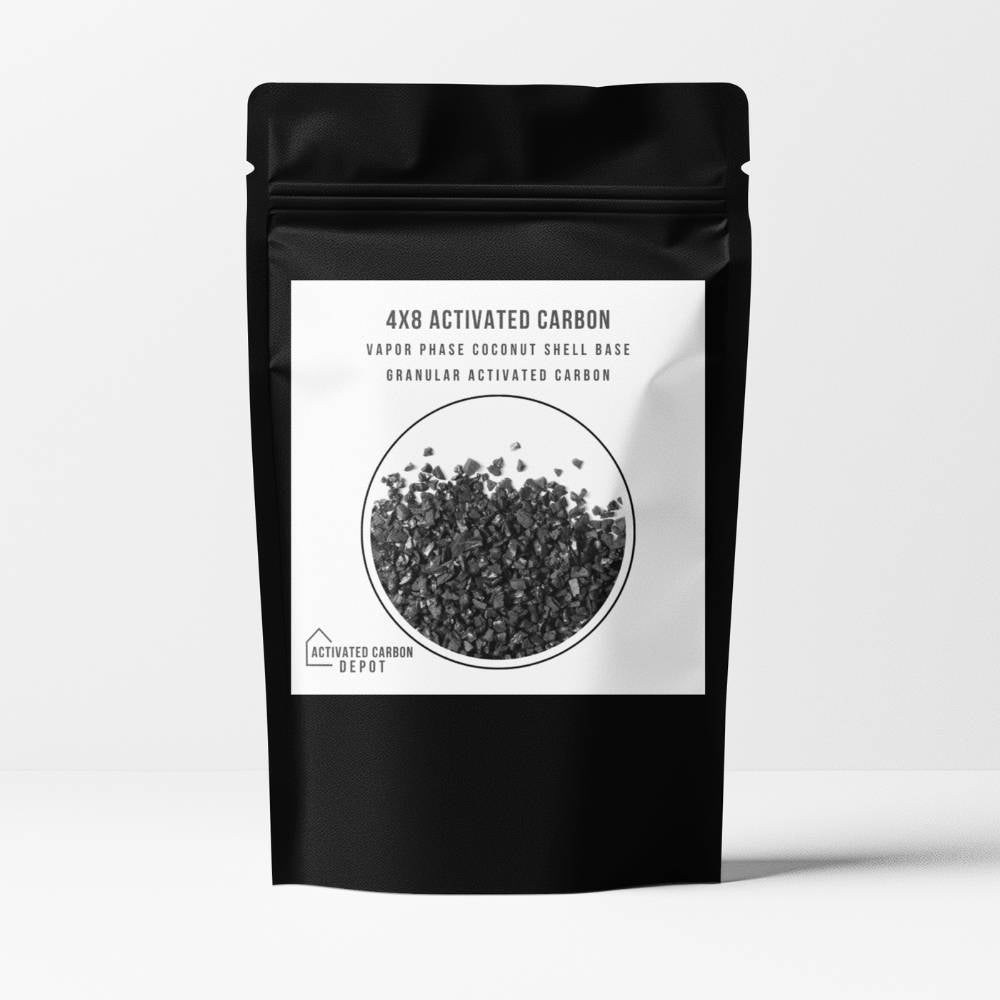
4x8 Vapor Phase Coconut Shell Granular Activated Carbon (60CTC)
Vapor-phase coconut shell GAC for industrial air treatment, air purification and odor-control systems.
Shop Now
Powdered Activated Carbon - Hardwood (Decolorization)
Fine hardwood-derived PAC for decolorization and liquid-phase water, wastewater and process treatment.
Shop Now