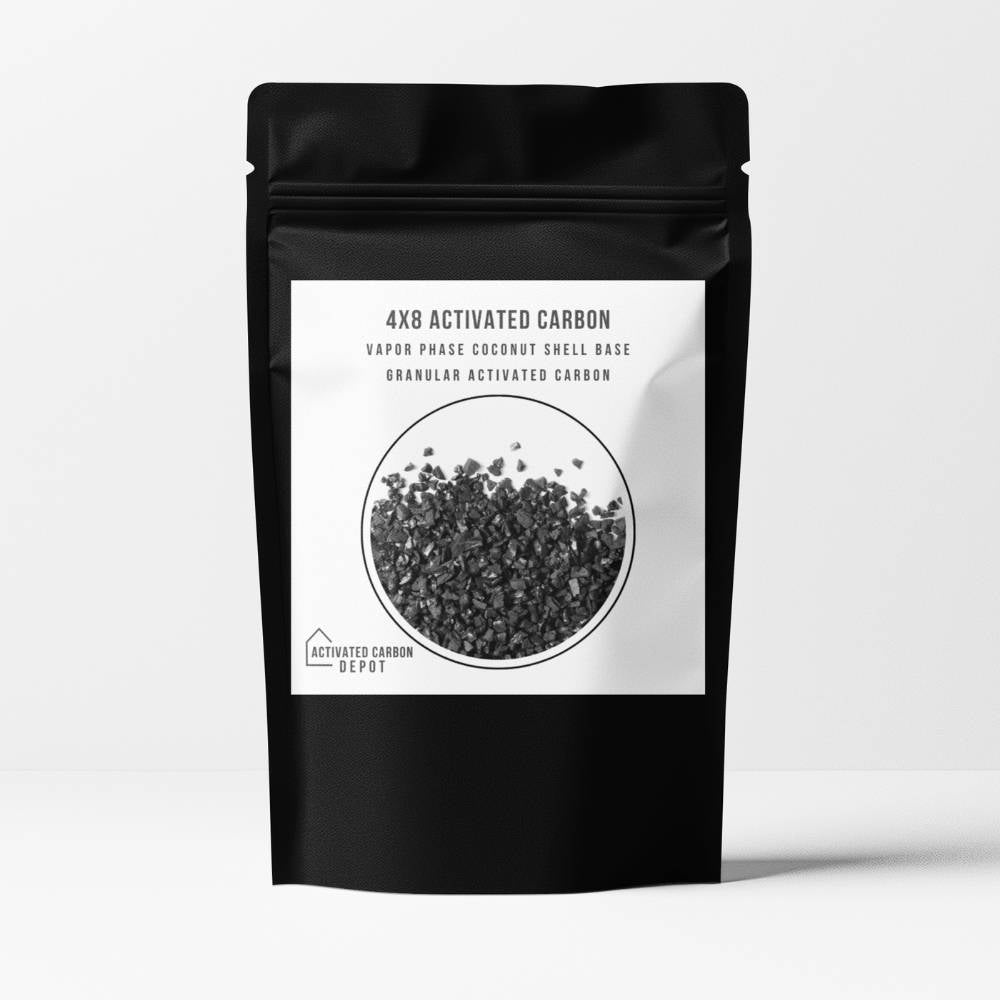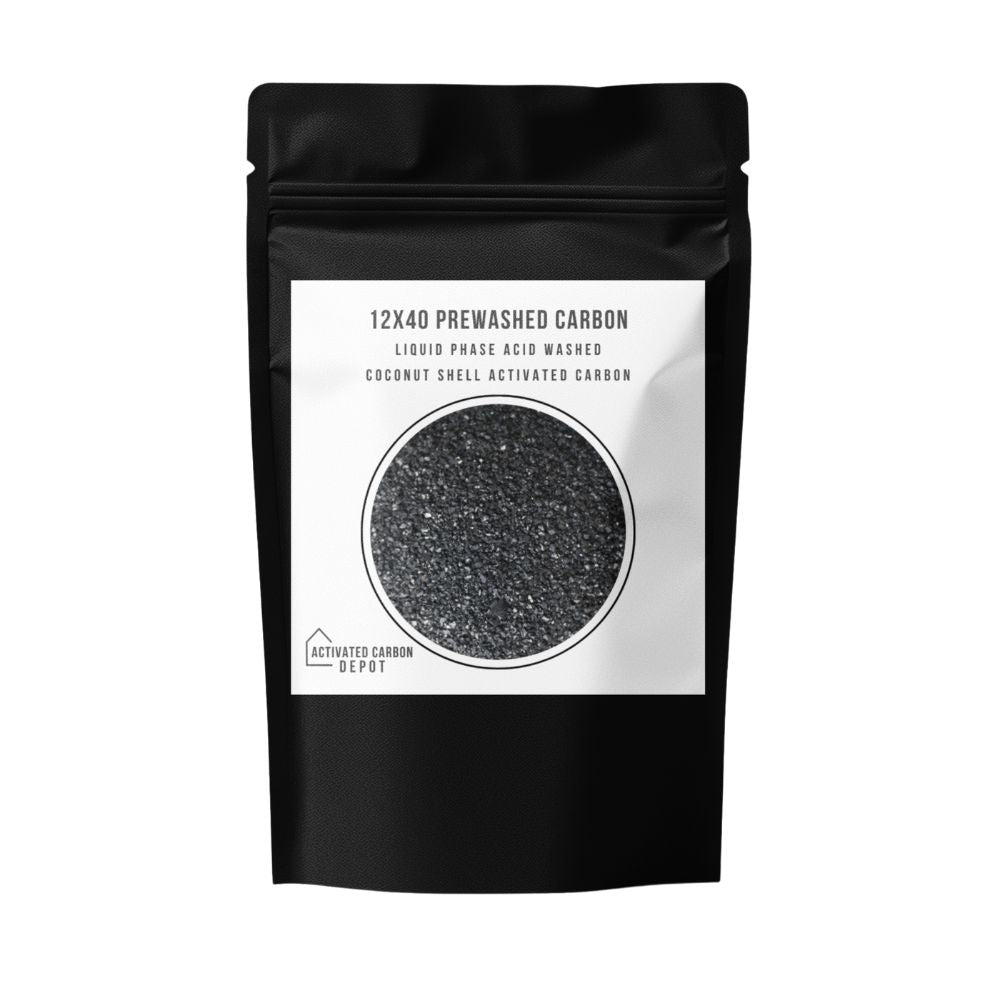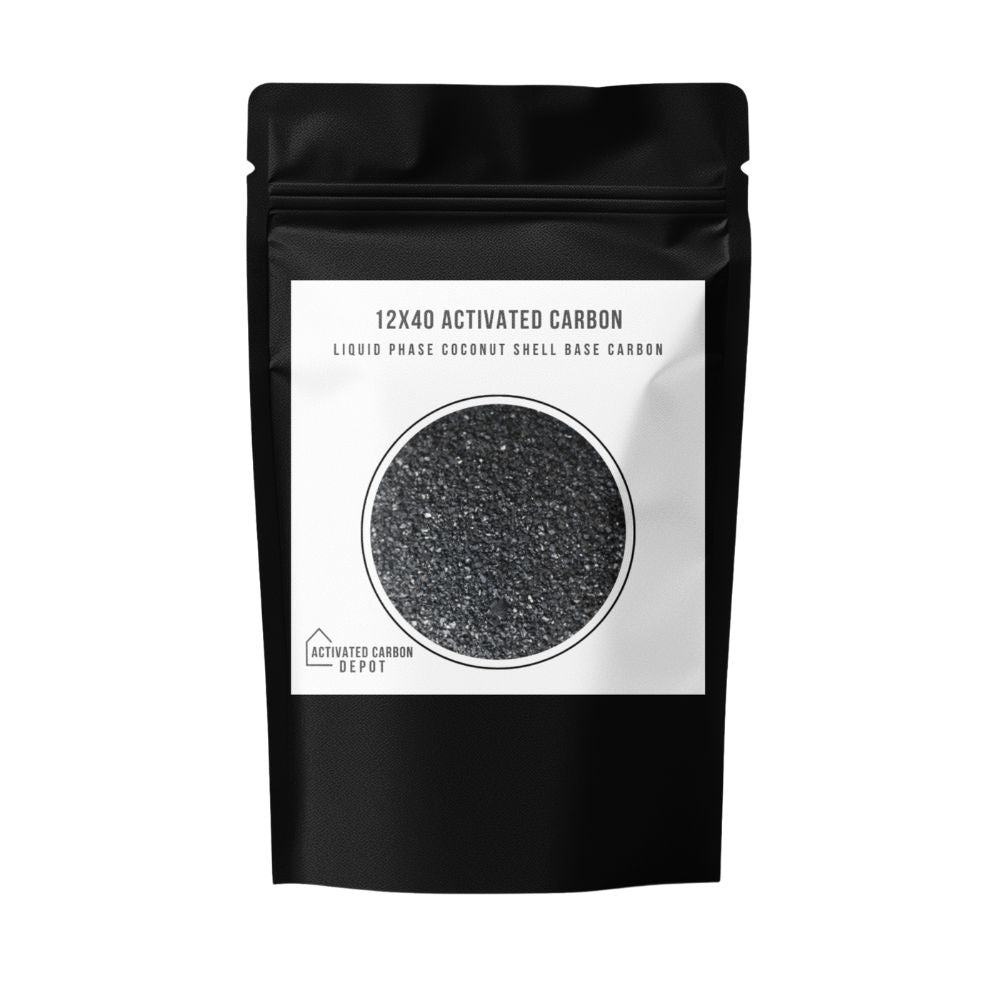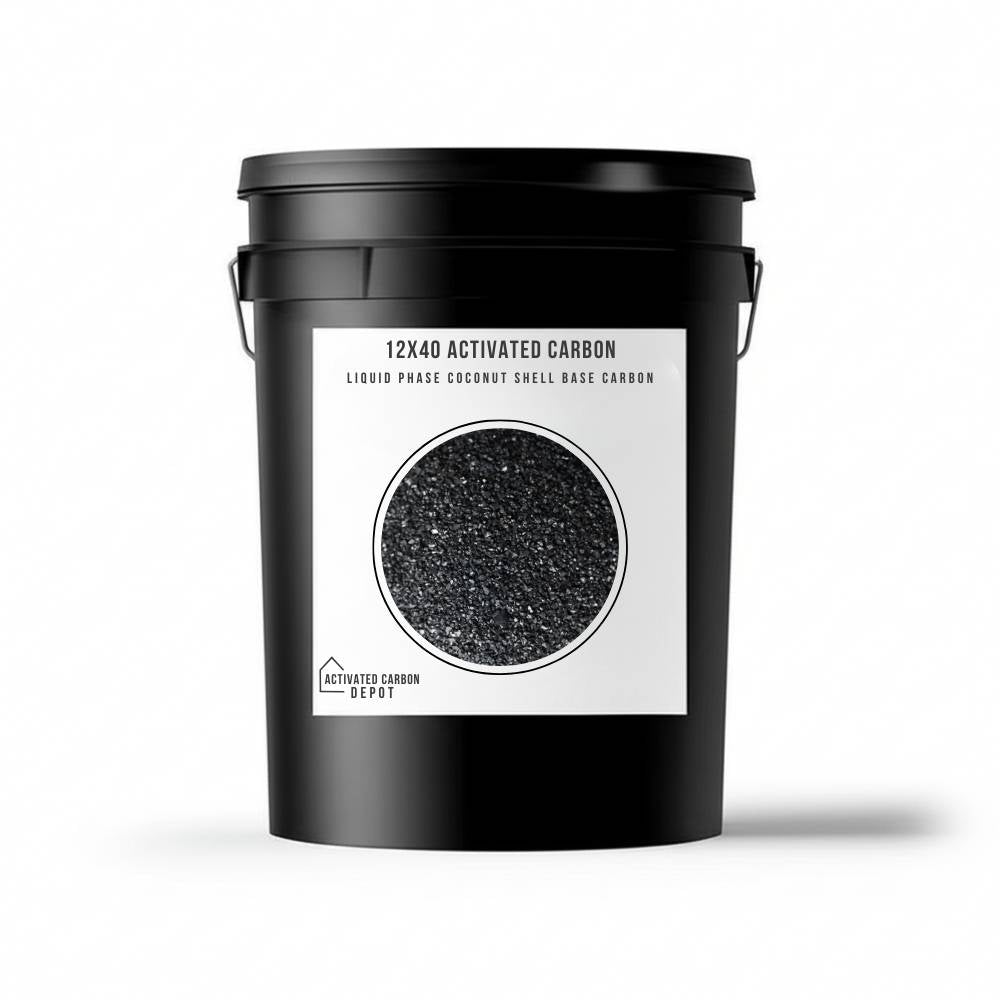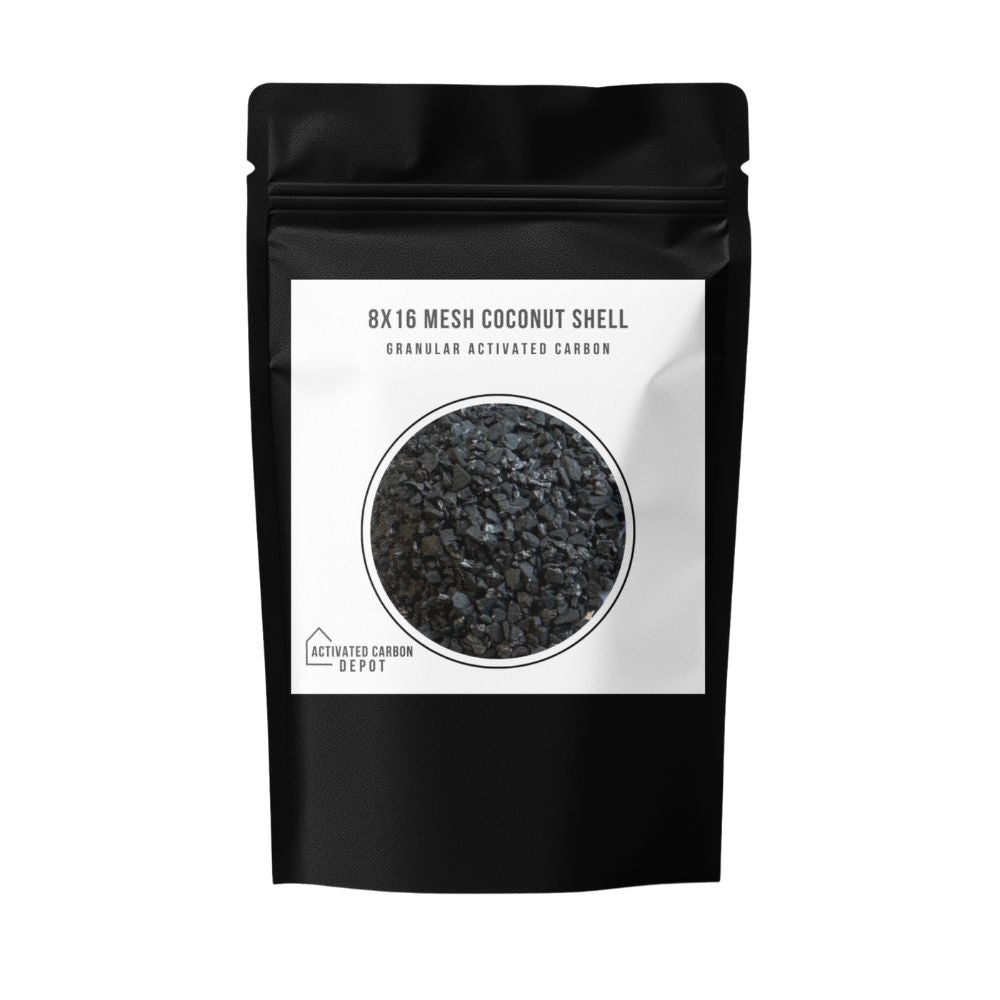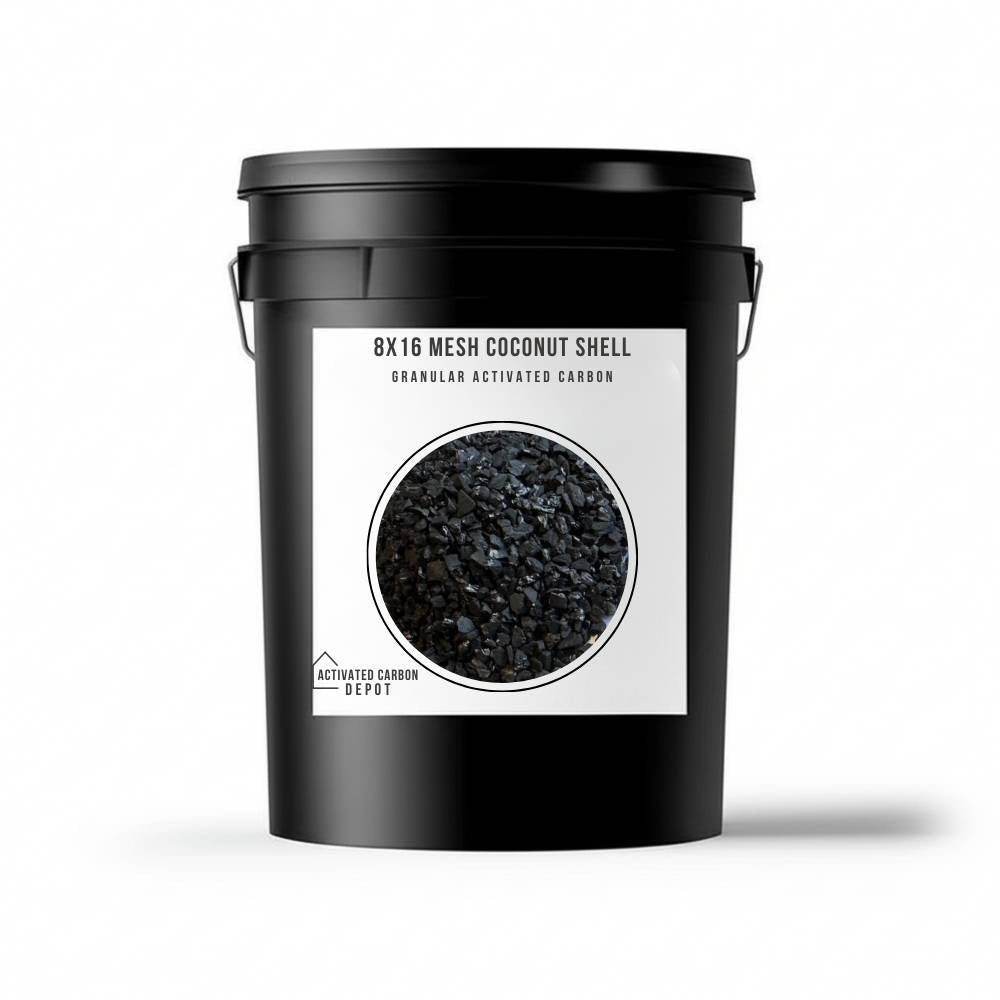
Activated carbon is used across an enormous range of industries, but buying it in bulk can quickly become more complicated than simply choosing a bag of carbon.
Should you use coconut shell, coal-based, or wood-based carbon? Granular activated carbon or pellets? What does 12×40 mesh mean? Is a higher iodine number always better? What is CTC activity? And how do you determine whether a particular carbon is designed for liquid-phase or vapor-phase treatment?
At Activated Carbon Depot, we supply activated carbon for applications ranging from drinking water and industrial water treatment to air purification, odor control, chemical processing, remediation, and vapor filtration. One of the most important things we've learned is that there isn't one activated carbon that's best for every application.
The right carbon depends on what you're trying to adsorb, whether you're treating a liquid or gas, your equipment, required flow characteristics, contact time, and the specifications of the carbon itself.
This guide provides a starting point for understanding those variables and selecting bulk activated carbon for your application.
Quick Answer: How Do You Choose Bulk Activated Carbon?
When selecting bulk activated carbon, consider these factors first:
| Selection Factor | What to Determine |
|---|---|
| Application | Water, wastewater, air, vapor, chemical processing, remediation, etc. |
| Phase | Liquid-phase or vapor-phase treatment |
| Target contaminant | What compounds are you trying to adsorb? |
| Raw material | Coconut shell, coal, wood, or another carbon source |
| Carbon form | Granular, pelletized, or powdered |
| Particle size | Mesh size or pellet diameter |
| Adsorption properties | Iodine number, CTC activity, surface area and pore structure |
| Physical properties | Hardness, ash, moisture and apparent density |
| Treatment requirements | Flow rate, contact time, pressure drop and carbon-bed dimensions |
| Quantity | Individual bags, pallet quantities, super sacks or larger commercial volumes |
These properties are interconnected.
A carbon with an impressive specification on paper isn't necessarily the best carbon for a particular treatment system. Activated carbon should be selected according to the contaminant, application and equipment—not a single specification.
What Is Activated Carbon?
Activated carbon is a highly porous adsorbent manufactured from carbon-rich raw materials.
During production, the material undergoes an activation process that develops a complex network of pores throughout the carbon.
These pores create an extremely large internal surface area.
When contaminated water, air, gas, or another fluid passes through or contacts activated carbon, certain molecules can adhere to these internal surfaces through a process called adsorption.
This enormous internal pore network is why a relatively small quantity of activated carbon can interact with a substantial amount of contaminant molecules.
Adsorption vs. Absorption
These terms are frequently confused.
Absorption involves one substance entering the volume of another material.
Adsorption occurs when molecules accumulate on a surface.
Activated carbon primarily operates through adsorption.
Contaminants travel through the pore structure and interact with adsorption sites along the carbon's internal surface.
The effectiveness of that process depends on several variables, including:
- Molecular size
- Contaminant concentration
- Carbon pore-size distribution
- Temperature
- pH in liquid applications
- Competing contaminants
- Contact time
- Carbon quantity
- Flow conditions
This is why selecting activated carbon requires more than simply comparing surface-area numbers.
What Is Bulk Activated Carbon?
"Bulk activated carbon" generally refers to activated carbon purchased in commercial quantities rather than small consumer packages.
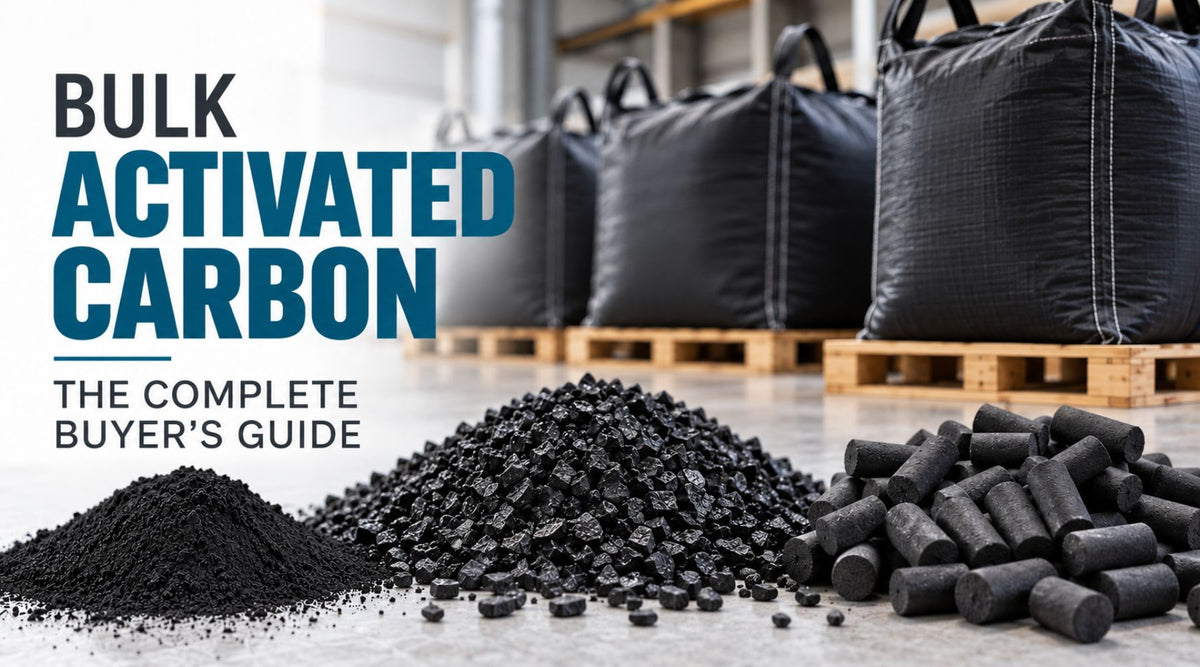
Depending on the application and purchasing requirements, bulk carbon may be supplied in bags, palletized quantities, super sacks, or larger commercial shipments.
At Activated Carbon Depot, our bulk offerings allow customers to source activated carbon for industrial, municipal, commercial, environmental, manufacturing, and large-scale filtration applications.
Bulk purchasing can make sense when carbon is needed for:
- Large filtration vessels
- Municipal water treatment
- Industrial process water
- Wastewater treatment
- Air purification
- Industrial odor control
- VOC treatment
- Environmental remediation
- Chemical processing
- Food and beverage processing
- Manufacturing processes
- Replacement carbon programs
- Large commercial filtration systems
The appropriate quantity depends heavily on the treatment system.
The Three Main Forms of Activated Carbon
One of the first decisions when purchasing carbon is its physical form.
The three major categories are granular activated carbon (GAC), pelletized activated carbon, and powdered activated carbon (PAC).
Granular Activated Carbon — GAC
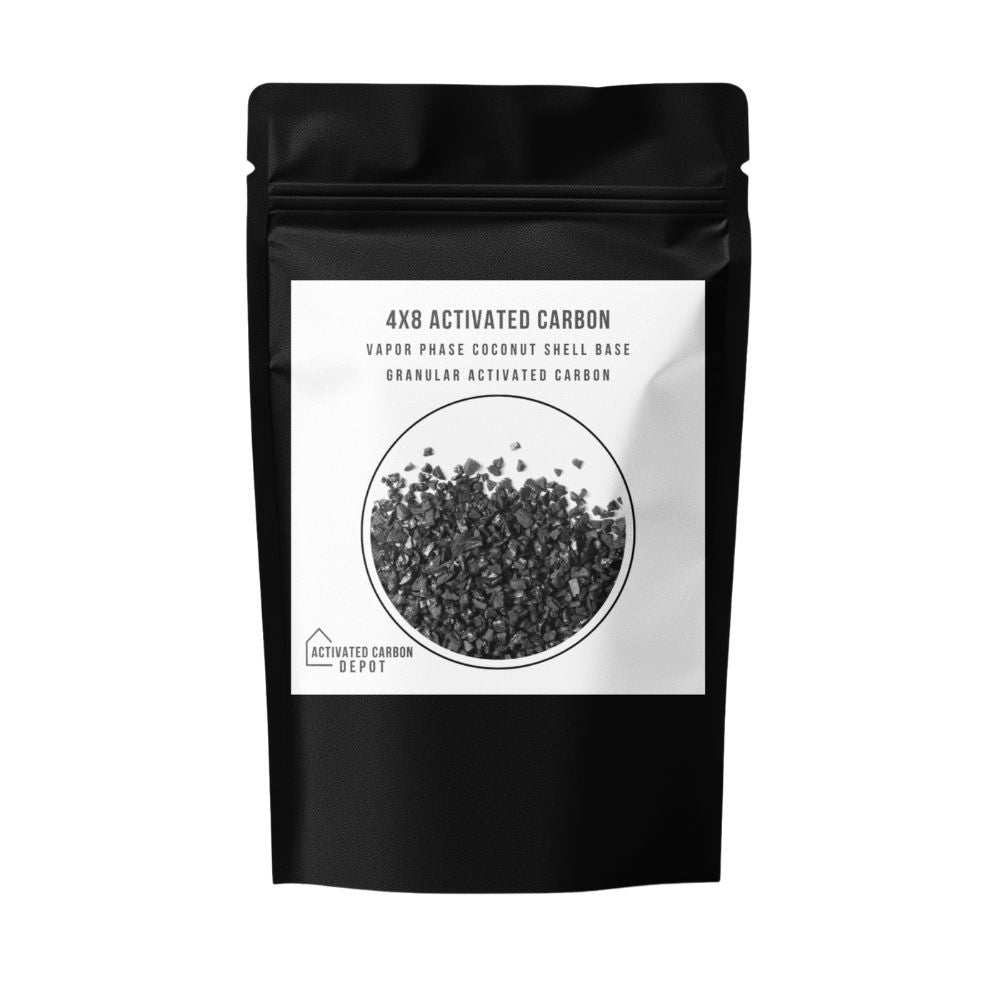
Granular activated carbon consists of irregular carbon particles larger than powdered carbon.
Common mesh sizes include:
- 4×8
- 6×12
- 8×16
- 8×30
- 12×40
GAC is widely used in fixed-bed treatment systems where water or another fluid passes through a bed of carbon.
Applications can include:
- Drinking water
- Municipal water treatment
- Industrial process water
- Wastewater
- Groundwater remediation
- Food and beverage processing
- Chemical processing
- Aquarium filtration
- Distillation-related filtration
Certain granular carbons are also used for vapor-phase applications.
Advantages of GAC
Granular carbon can provide a useful balance between adsorption performance, hydraulic characteristics, contact time, and pressure drop.
Particle size becomes particularly important when designing or operating a GAC bed.
Pelletized Activated Carbon
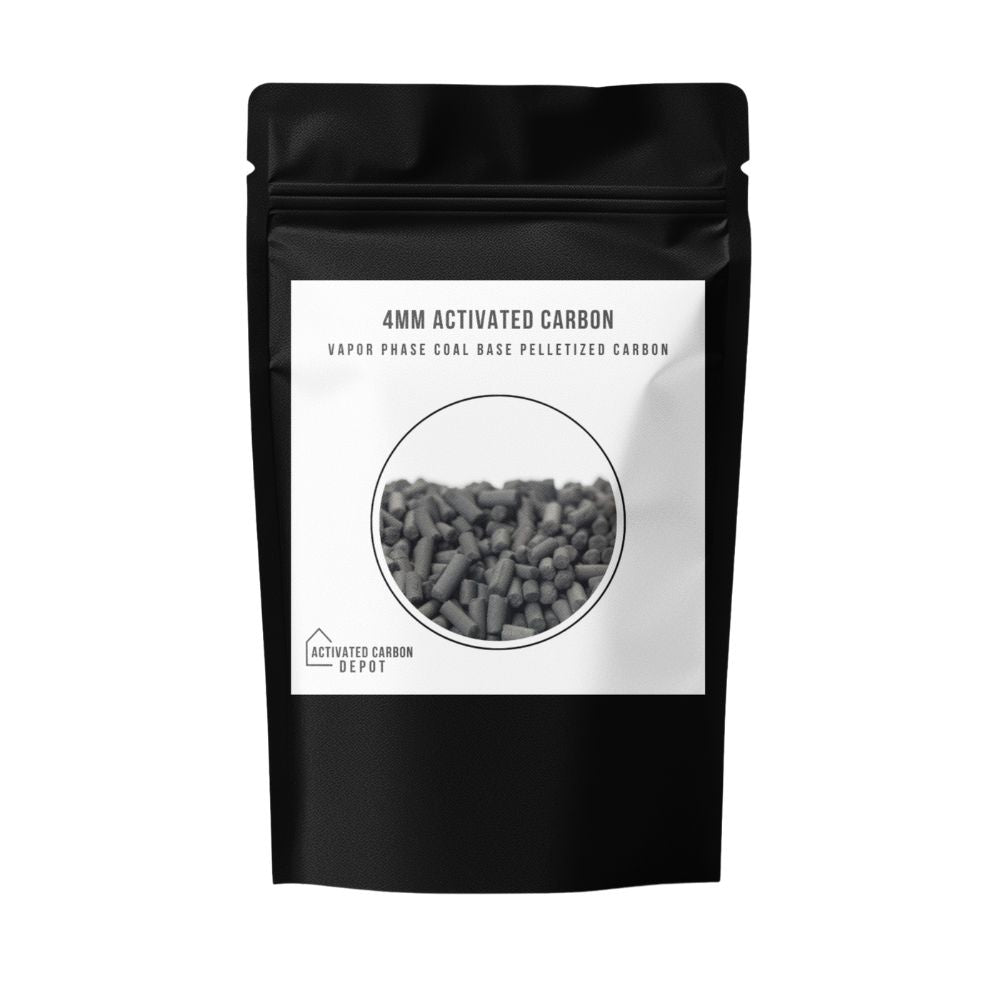
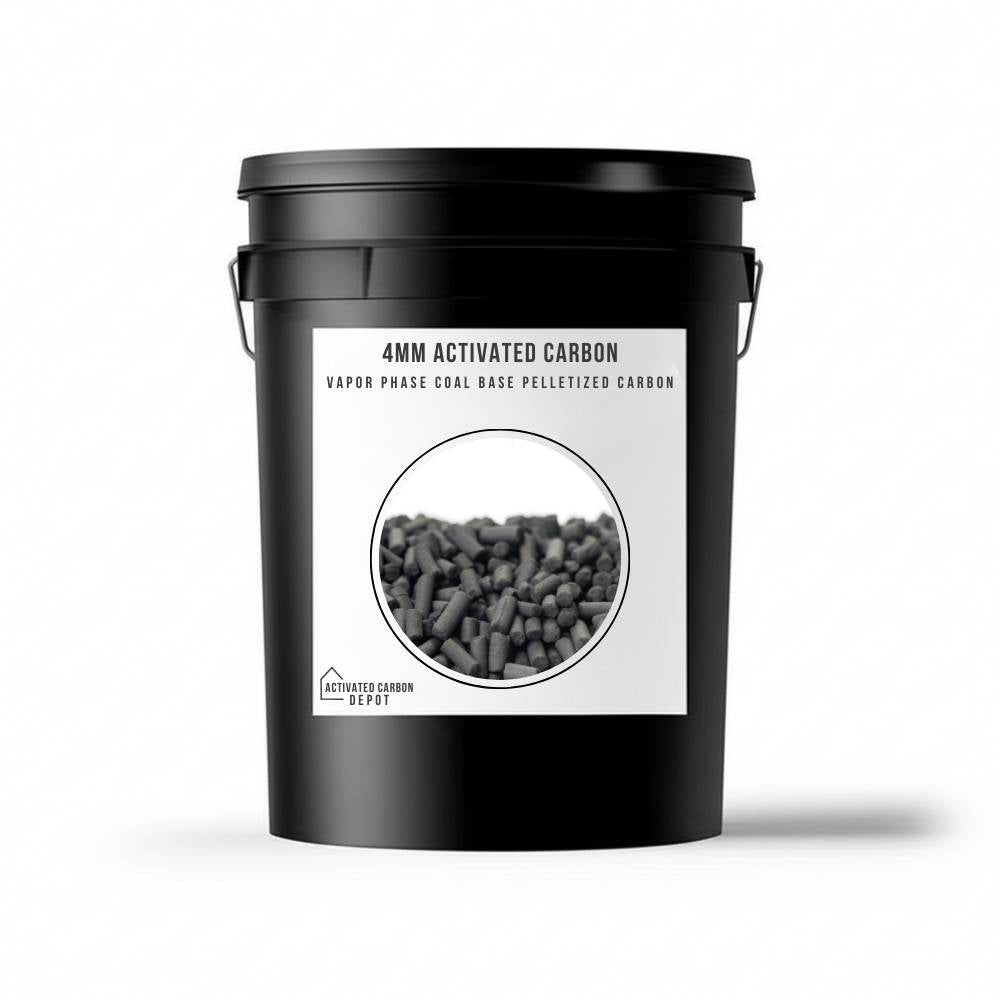
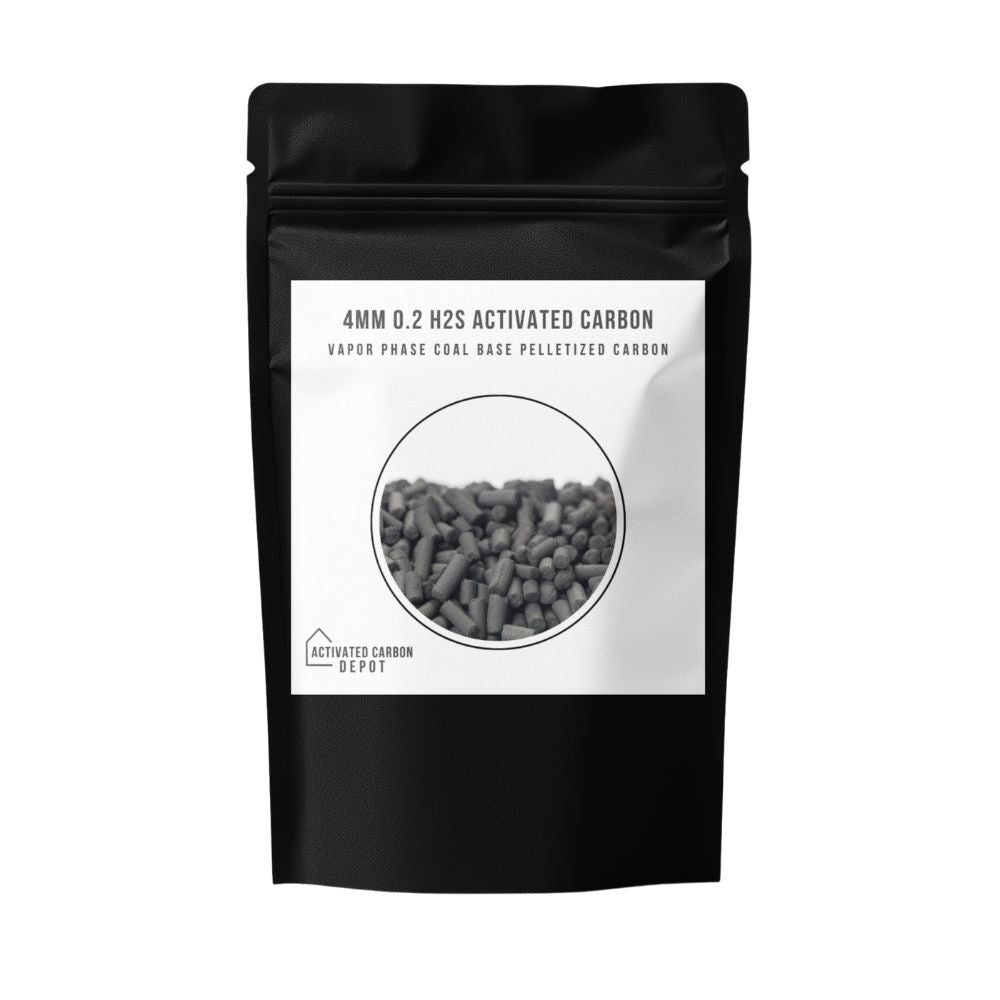
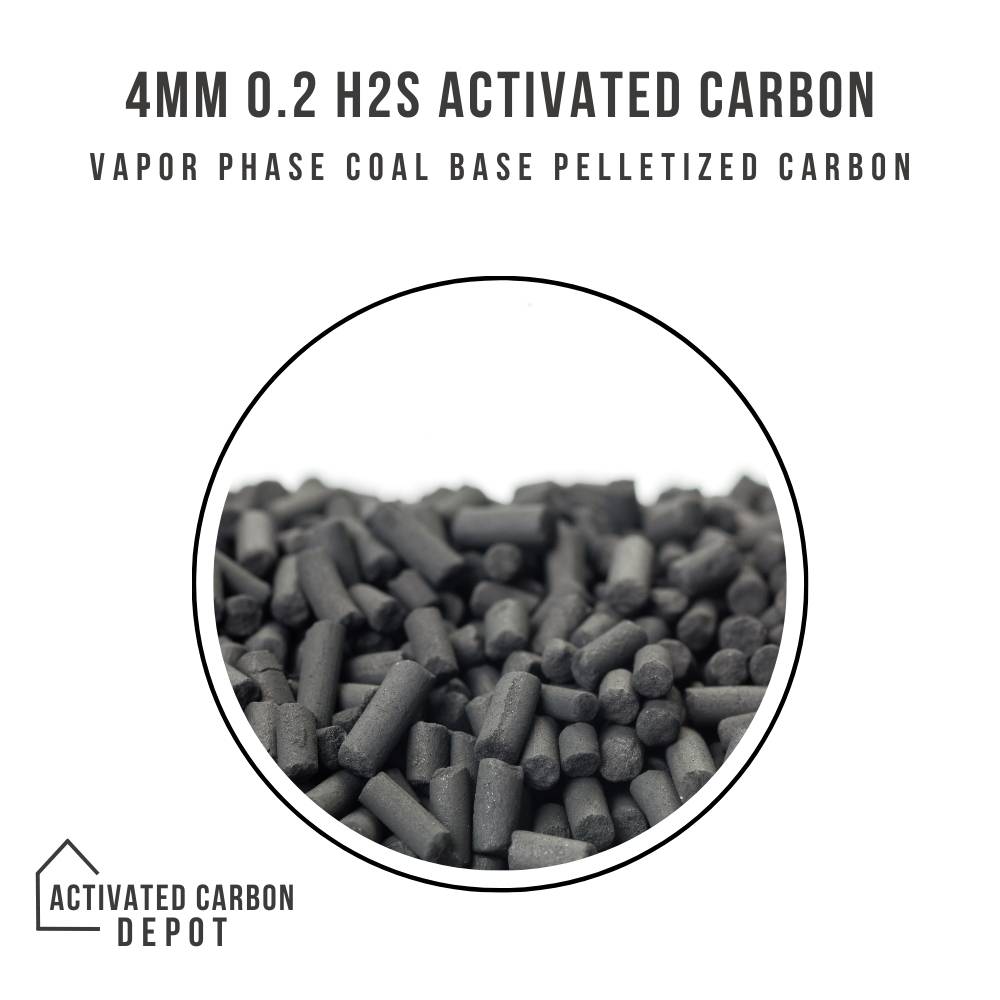
Pelletized activated carbon is manufactured in cylindrical extruded shapes.
Common pellet diameters include:
- 3 mm
- 4 mm
Pellets are particularly common in air and vapor-phase treatment systems.
Potential applications include:
- Industrial air purification
- VOC adsorption
- Odor control
- Vapor recovery
- Kitchen ventilation
- Fuel vapor systems
- Manufacturing exhaust
- Specialty air-treatment systems
The uniform shape of pellets can provide desirable airflow characteristics and relatively low pressure drop within properly designed beds.
Pellets can also provide good mechanical strength, which helps reduce attrition and the generation of fines.
Powdered Activated Carbon — PAC
Powdered activated carbon consists of much smaller carbon particles than GAC.
Instead of remaining permanently inside a traditional fixed bed, PAC is frequently dosed directly into a treatment process and subsequently separated.
Applications can include:
- Municipal water treatment
- Wastewater treatment
- Emergency contaminant treatment
- Industrial processing
- Chemical processing
- Soil and environmental applications
- Food and beverage processing
Because PAC has a very small particle size, it behaves differently from granular or pelletized media and requires an appropriate dosing and separation system.
Coconut Shell vs. Coal vs. Wood Activated Carbon
Raw material influences the pore structure and characteristics of activated carbon.
Three of the most common feedstocks are coconut shell, coal, and wood.
Coconut Shell Activated Carbon
Coconut shell activated carbon is known for its highly developed microporous structure and high hardness.
It is widely used for applications involving relatively small molecules.
Common applications include:
- Drinking water treatment
- Point-of-use filtration
- Municipal water
- Beverage processing
- Distilleries
- Aquarium filtration
- Vapor-phase filtration
- VOC adsorption
- Specialty purification
Coconut shell carbon is available in multiple mesh sizes as well as pelletized and powdered forms depending on the product.
Coal-Based Activated Carbon
Coal-based activated carbon can provide a broader pore-size distribution than many coconut shell carbons.
Depending on the grade, it can be useful for applications involving a wider range of molecular sizes.
Common applications include:
- Municipal water treatment
- Industrial wastewater
- Process water
- Air purification
- Odor control
- Vapor treatment
- Environmental applications
Coal-based activated carbon is available in granular and pelletized forms.
Wood-Based Activated Carbon
Wood-based activated carbon is commonly associated with a more developed mesopore and macropore structure and is frequently manufactured as powdered activated carbon.
This can make certain wood-based carbons useful for adsorption of larger molecules.
Applications can include:
- Decolorization
- Chemical processing
- Food and beverage processing
- Wastewater
- Specialty purification processes
The raw material alone, however, shouldn't determine carbon selection. Activation method and final specifications are equally important.
Coconut vs. Coal vs. Wood: Quick Comparison
| Property | Coconut Shell | Coal | Wood |
|---|---|---|---|
| Typical pore tendency | More microporous | Broader pore distribution | More meso/macroporous |
| Hardness | Generally high | Generally good | Depends on form |
| Common forms | GAC, PAC, pellets | GAC, pellets, PAC | Often PAC |
| Drinking water | Excellent option | Common | Application dependent |
| Vapor treatment | Common | Common | Less typical |
| Large-molecule adsorption | Application dependent | Good range | Often advantageous |
| Decolorization | Application dependent | Application dependent | Common |
| Industrial use | Extensive | Extensive | Extensive |
These are general characteristics—not absolute rules.
Individual product specifications should always be evaluated.
Liquid-Phase vs. Vapor-Phase Activated Carbon
Another major distinction is whether the carbon will treat a liquid or gas stream.
Liquid-Phase Carbon
Liquid-phase activated carbon is designed for applications where a liquid—most commonly water—contacts the carbon.
Examples include:
- Drinking water
- Groundwater
- Wastewater
- Process water
- Beverage production
- Chemical processing
Important factors can include particle size, adsorption characteristics, contact time, pressure drop, water chemistry, and target contaminants.
Vapor-Phase Carbon
Vapor-phase activated carbon treats contaminated air or gas.
Examples include:
- VOC treatment
- Industrial odor control
- Air purification
- Solvent vapor adsorption
- Manufacturing emissions
- Kitchen hood filtration
- Fuel vapor applications
Granular carbon and pellets can both be used depending on system design.
For vapor applications, airflow resistance and pressure drop can become particularly important.
Understanding Activated Carbon Mesh Size
Mesh size describes the particle-size range of granular activated carbon.
A designation such as 12×40 mesh refers to two screen sizes used to classify the carbon particles.
In simplified terms, a 12×40 carbon contains particles within the range defined by those screens.
The important takeaway for buyers is:
A lower mesh number corresponds to a larger screen opening, while a higher mesh number corresponds to a smaller screen opening.
Therefore, 4×8 GAC contains substantially larger particles than 12×40 GAC.
Why Does Activated Carbon Particle Size Matter?
Particle size affects several characteristics of a carbon bed.
Smaller particles can provide shorter diffusion paths into the carbon but can also create greater resistance to flow.
Larger particles generally provide lower pressure drop but different mass-transfer characteristics.
This creates a design tradeoff:
Smaller particles → potentially faster adsorption kinetics → higher pressure drop
Larger particles → lower pressure drop → potentially slower adsorption kinetics
That's one reason why a 12×40 carbon isn't automatically "better" than an 8×30 or 4×8 carbon.
The treatment system matters.
Common Activated Carbon Mesh Sizes
4×8 Activated Carbon
A relatively coarse granular carbon commonly used where lower pressure drop and larger granules are desirable.
6×12 Activated Carbon
Another coarse GAC size that can provide useful flow characteristics in appropriately designed systems.
8×16 Activated Carbon
A medium-coarse granular size suitable for various industrial applications.
8×30 Activated Carbon
A common liquid-phase particle range that provides a balance between adsorption kinetics and hydraulic performance.
12×40 Activated Carbon
A finer granular carbon widely used in water purification and other liquid-phase applications.
We'll cover these differences much more deeply in our dedicated Activated Carbon Mesh Size Guide.
What Is Iodine Number?
Iodine number is one of the most frequently listed activated carbon specifications.
It is commonly expressed in mg/g and is used as an indicator associated with the carbon's micropore structure and adsorption capacity for relatively small molecules.
For example, you may encounter activated carbon specified at:
- 800 mg/g iodine
- 900 mg/g iodine
- 1,000 mg/g iodine
- 1,100+ mg/g iodine
A higher iodine number can indicate greater micropore development, but this does not mean that the carbon with the highest iodine number is automatically the best product for every contaminant.
Molecular size and pore-size distribution matter.
What Does CTC Mean?
CTC activity refers to carbon tetrachloride activity, a specification traditionally used to characterize activated carbon—particularly carbon intended for certain vapor-phase applications.
You may see specifications such as:
- 50 CTC
- 60 CTC
- 70 CTC
CTC activity provides information about the carbon's adsorption characteristics under the specified test conditions.
As with iodine number, it shouldn't be used in isolation.
The correct carbon still depends on the actual application and target compounds.
What Is Activated Carbon Surface Area?
Activated carbon is known for its extremely large internal surface area.
Surface area is commonly reported in square meters per gram (m²/g).
That number can seem extraordinary until you understand that most of the surface isn't visible on the outside of the granule.
It exists inside the microscopic pore network.
However, total surface area isn't the entire story.
The distribution of pore sizes determines whether contaminant molecules can effectively access that surface.
That's why two carbons with similar total surface areas can perform differently against a particular contaminant.
Other Activated Carbon Specifications Buyers Should Understand
Hardness
Hardness describes the carbon's resistance to physical breakdown and abrasion.
Higher mechanical strength can be particularly valuable when carbon experiences:
- Shipping
- Handling
- Backwashing
- Bed movement
- Repeated operating cycles
Excessive breakdown can create fines and affect system operation.
Ash Content
Ash represents inorganic material remaining in the activated carbon.
Acceptable ash levels depend on the carbon and application.
Moisture
Moisture content indicates the amount of water present in the carbon as supplied.
This matters when comparing product weight and specifications.
Apparent Density
Apparent density helps determine how much carbon mass occupies a given volume.
This is particularly important when filling carbon vessels.
A treatment vessel is designed around volume, while activated carbon is often purchased by weight.
Understanding density helps connect the two.

Virgin vs. Reactivated Activated Carbon
Another purchasing decision is whether to use virgin or reactivated carbon.
Virgin Activated Carbon
Virgin carbon is newly manufactured from its original raw material and hasn't previously been used for adsorption.
It is commonly selected for applications requiring specific purity or performance characteristics.
Reactivated Activated Carbon
Reactivated carbon has previously been used and then thermally processed to restore a significant portion of its adsorption capability.
Reactivated carbon can be appropriate for certain industrial and environmental applications depending on regulatory, purity, and performance requirements.
The correct choice depends on the application.
For sensitive applications such as drinking water, food processing, or other regulated uses, applicable standards and system requirements should always be reviewed before choosing media.
How Much Activated Carbon Do You Need?
Carbon quantity depends on the system rather than a universal pounds-per-gallon or pounds-per-CFM rule.
For a fixed-bed system, important variables include:
- Vessel dimensions
- Bed depth
- Carbon density
- Flow rate
- Empty bed contact time
- Target contaminant
- Influent concentration
- Desired effluent concentration
- Expected service life
For water systems, Empty Bed Contact Time (EBCT) is particularly important.
EBCT describes the theoretical amount of time the water spends within the volume occupied by the carbon bed.
A longer contact time can improve adsorption opportunities, although system design must consider the complete treatment objective.
We'll cover this separately in our upcoming guide:
How Much Activated Carbon Do I Need?
How Is Bulk Activated Carbon Packaged?
Activated Carbon Depot offers bulk carbon in packaging configurations designed for both smaller commercial users and large treatment operations.
Depending on the product, options may include:
27.5 lb bags
55 lb bags
1,100 lb super sacks
This allows customers to purchase the same type of carbon at a quantity appropriate for their operation.
For large treatment projects, super sacks can simplify material handling and vessel loading when appropriate equipment is available.
What Is an Activated Carbon Super Sack?
A super sack—also called a flexible intermediate bulk container or FIBC—is a large industrial bag designed to transport bulk materials.
For activated carbon, a 1,100 lb super sack provides an efficient way to purchase and handle substantial quantities of media.
Super sacks can be useful for:
- Industrial treatment facilities
- Municipal systems
- Environmental contractors
- Carbon vessel service companies
- Manufacturers
- Large filtration installations
Facilities receiving super sacks should have appropriate material-handling equipment and procedures.
How Should Bulk Activated Carbon Be Stored?
Activated carbon should generally be kept:
- Dry
- Protected from weather
- Away from contaminant sources
- In sealed or appropriate packaging
- Away from strong oxidizers and incompatible materials
- In accordance with the product's SDS and handling instructions
Storage is especially important because activated carbon is an adsorbent.
Allowing carbon to remain exposed to contaminants in the surrounding environment can potentially consume adsorption capacity before the carbon reaches the treatment system.
Always consult the product's current Safety Data Sheet for specific storage and handling requirements.
Which Activated Carbon Should I Choose?
A useful starting point is to work through the selection process in this order.
Step 1: Identify the Treatment Phase
Are you treating:
Water or another liquid?
or
Air or another gas?
Step 2: Identify the Target Contaminant
Determine exactly what you're trying to adsorb.
"Improve water quality" isn't sufficiently specific for industrial carbon selection.
Neither is "remove odors."
Identify the target compounds whenever possible.
Step 3: Identify System Requirements
Consider:
- Flow rate
- Vessel dimensions
- Pressure limitations
- Bed depth
- Required contact time
- Existing media specifications
Step 4: Select Carbon Form
Choose among:
GAC
Pellets
PAC
based on system design.
Step 5: Select Raw Material and Pore Structure
Evaluate whether coconut shell, coal, wood, or a specialty carbon offers characteristics appropriate for the target contaminant.
Step 6: Select Particle Size
Choose the mesh range or pellet diameter compatible with the equipment and required performance.
Step 7: Compare Technical Specifications
Evaluate:
- Iodine number
- CTC where relevant
- Surface area where provided
- Hardness
- Ash
- Moisture
- Apparent density
- Additional application-specific specifications
Step 8: Determine Quantity and Packaging
Finally, determine whether the project requires individual bags, pallets, super sacks, or larger supply quantities.
Bulk Activated Carbon Selection Chart
| Application | Carbon Types Commonly Considered | Typical Form |
|---|---|---|
| Drinking water | Coconut shell, coal, catalytic carbon | GAC |
| Municipal water | Coconut shell, coal, PAC | GAC / PAC |
| Industrial process water | Coconut shell, coal | GAC |
| Wastewater | Coal, coconut, PAC | GAC / PAC |
| PFAS treatment | Application-specific GAC | GAC |
| VOC treatment | Coconut shell or coal | GAC / Pellets |
| Odor control | Coal or coconut | Pellets / GAC |
| H₂S treatment | Specialty/impregnated or catalytic carbon | Pellets / GAC |
| Chemical processing | Application dependent | GAC / PAC |
| Decolorization | Often wood or specialty carbon | PAC |
| Air purification | Coconut shell or coal | Pellets / GAC |
| Vapor recovery | High-activity vapor carbon | GAC / Pellets |
This table should be treated as initial selection guidance, not a final engineering specification. Contaminant chemistry and system design ultimately determine the appropriate carbon.

Frequently Asked Questions About Bulk Activated Carbon
What is the best activated carbon?
There isn't one universally "best" activated carbon. The appropriate carbon depends on the contaminant, treatment phase, required adsorption characteristics, equipment design, flow conditions, contact time, and other operating requirements.
Is coconut shell activated carbon better than coal?
Not universally.
Coconut shell carbon generally has a highly developed microporous structure and high hardness, while coal-based carbon can provide a broader pore-size distribution. Either may outperform the other depending on the compounds being adsorbed and treatment conditions.
Is a higher iodine number always better?
No.
Iodine number provides useful information about micropore development, but it doesn't fully describe how a carbon will perform against every contaminant.
Pore-size distribution and contaminant characteristics must also be considered.
What is the difference between GAC and PAC?
Granular activated carbon consists of larger particles commonly used in fixed beds. Powdered activated carbon contains much finer particles and is often dosed into a treatment stream before being separated later in the process.
What does 12×40 activated carbon mean?
12×40 identifies a particle-size range based on mesh screens. It is a commonly used granular activated carbon size, particularly in liquid-phase treatment.
What is pelletized activated carbon used for?
Pellet carbon is widely used in air and vapor treatment because its uniform cylindrical form can provide favorable airflow characteristics and relatively low pressure drop.
Can activated carbon remove every contaminant?
No.
Activated carbon is highly effective for many organic compounds and selected inorganic contaminants under appropriate conditions, but it isn't a universal treatment technology.
Performance depends on contaminant chemistry, carbon properties, contact time, operating conditions, and system design.
How do I know when activated carbon is exhausted?
Carbon becomes exhausted when adsorption sites become sufficiently occupied that contaminants begin passing through the bed at unacceptable concentrations.
This is commonly called breakthrough.
Industrial systems may use sampling, analytical testing, breakthrough curves, operating history, or scheduled changeouts to determine when replacement is required.
Why Buy Bulk Activated Carbon From Activated Carbon Depot?
At Activated Carbon Depot, we want customers to understand the carbon they're purchasing—not simply select a product based on a single number.
Our product range includes activated carbon for both liquid-phase and vapor-phase applications, including granular, pelletized, powdered, virgin, catalytic, specialty, and other carbon products.
We also provide bulk purchasing options for customers who need quantities ranging from commercial bag and pallet orders to 1,100 lb super sacks.
Just as importantly, we're continuing to build our Activated Carbon Learning Center around the technical questions customers encounter when specifying carbon.
If you're comparing bulk activated carbon, start with the application rather than the product.
Identify the contaminant, treatment phase, equipment requirements, flow conditions, and quantity you need. From there, specifications such as mesh size, iodine number, CTC, hardness, density, and pore structure become much more useful.
Final Thoughts
Activated carbon is not a commodity where every grade is interchangeable.
Two products can both be called "activated carbon" while having significantly different raw materials, pore structures, particle sizes, adsorption characteristics, densities, physical strengths, and intended applications.
That's why selecting bulk activated carbon should be a technical selection process rather than simply a price comparison.
Understanding the fundamentals—GAC vs. PAC vs. pellets, coconut vs. coal vs. wood, liquid vs. vapor phase, particle size, iodine number, CTC, density, hardness, contact time, and target contaminants—makes it much easier to identify the appropriate media.
At Activated Carbon Depot, our goal is to make that process easier by providing both the activated carbon and the technical information needed to understand it.
Shop Bulk Activated Carbon
Explore coconut shell activated carbon in super sack and pallet quantities: