If you've been researching EVAP system problems, you've probably come across replacement charcoal canisters—and perhaps even wondered whether you can simply refill the activated carbon instead of replacing the entire unit.
At Activated Carbon Depot, this is one of the most common questions we receive from DIY mechanics, restoration enthusiasts, powersports owners, and repair professionals.
Yes, some fuel vapor canisters can be refilled with fresh activated carbon instead of replacing the entire canister. However, whether this is a practical option depends on the design and condition of the canister itself.
What Is an EVAP Canister?
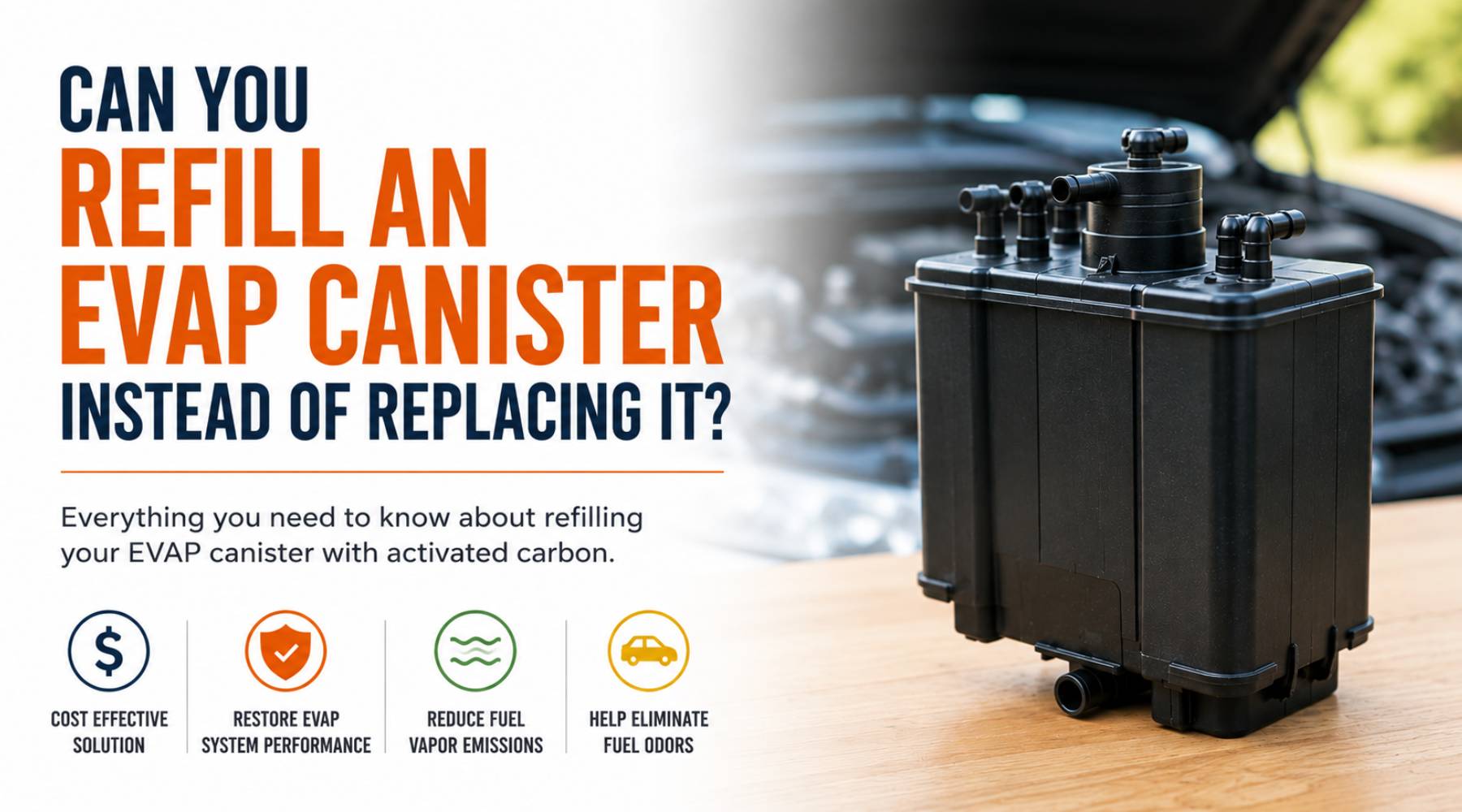
An EVAP (Evaporative Emissions Control) canister—often called a charcoal canister or fuel vapor canister—is designed to capture gasoline vapors from the fuel tank before they escape into the atmosphere. Instead of venting fuel vapors directly into the air, the EVAP system stores them inside activated carbon until the engine can safely draw them back into the intake and burn them during normal operation.
This system helps reduce fuel vapor emissions, minimize gasoline odors, improve environmental performance, and recover fuel vapors that would otherwise be lost.
How Does Activated Carbon Capture Fuel Vapors?
Activated carbon removes gasoline vapors through adsorption. During manufacturing, the carbon is thermally activated, creating millions of microscopic pores that dramatically increase its internal surface area. As fuel vapors pass through the canister, hydrocarbon molecules adhere to the carbon's surface, the vapors remain stored until the vehicle's purge system pulls fresh air through the canister, and the stored vapors are then carried into the engine and burned during combustion.

Can Every EVAP Canister Be Refilled?
No. Some EVAP canisters are permanently sealed and are designed to be replaced as complete assemblies if they fail. Others can be carefully opened, serviced, and refilled with new activated carbon. A refill may be appropriate if the housing is structurally sound, internal screens are intact, the fittings are undamaged, there are no cracks or broken plastic components, and the only issue is degraded or contaminated carbon media.
Signs the Activated Carbon May Need Replacement
Some common symptoms associated with EVAP system problems include persistent gasoline odors, fuel odors around the vehicle after parking, difficulty filling the fuel tank, EVAP-related diagnostic trouble codes, and poor vapor storage performance. It's important to remember that these symptoms do not automatically mean the carbon is the problem. Proper diagnosis should always be performed before servicing the system.
When Refilling Makes Sense
Many enthusiasts choose to refill an EVAP canister when restoring older vehicles, maintaining classic cars, repairing powersports equipment, servicing motorcycles or ATVs, maintaining generators or marine fuel systems, or repairing custom vapor recovery systems. In these situations, replacing only the activated carbon can often be a practical and economical solution when the canister housing remains in good condition.
Why the Type of Activated Carbon Matters
One of the biggest mistakes we see is using generic activated carbon that wasn't designed for gasoline vapor filtration. Fuel vapor canisters require activated carbon that provides high vapor adsorption capacity, excellent airflow, high mechanical strength, consistent pellet size, and low dust generation. Using the wrong carbon can reduce airflow, shorten service life, or decrease vapor adsorption efficiency.
Why 3mm Pelletized Activated Carbon Is Commonly Used
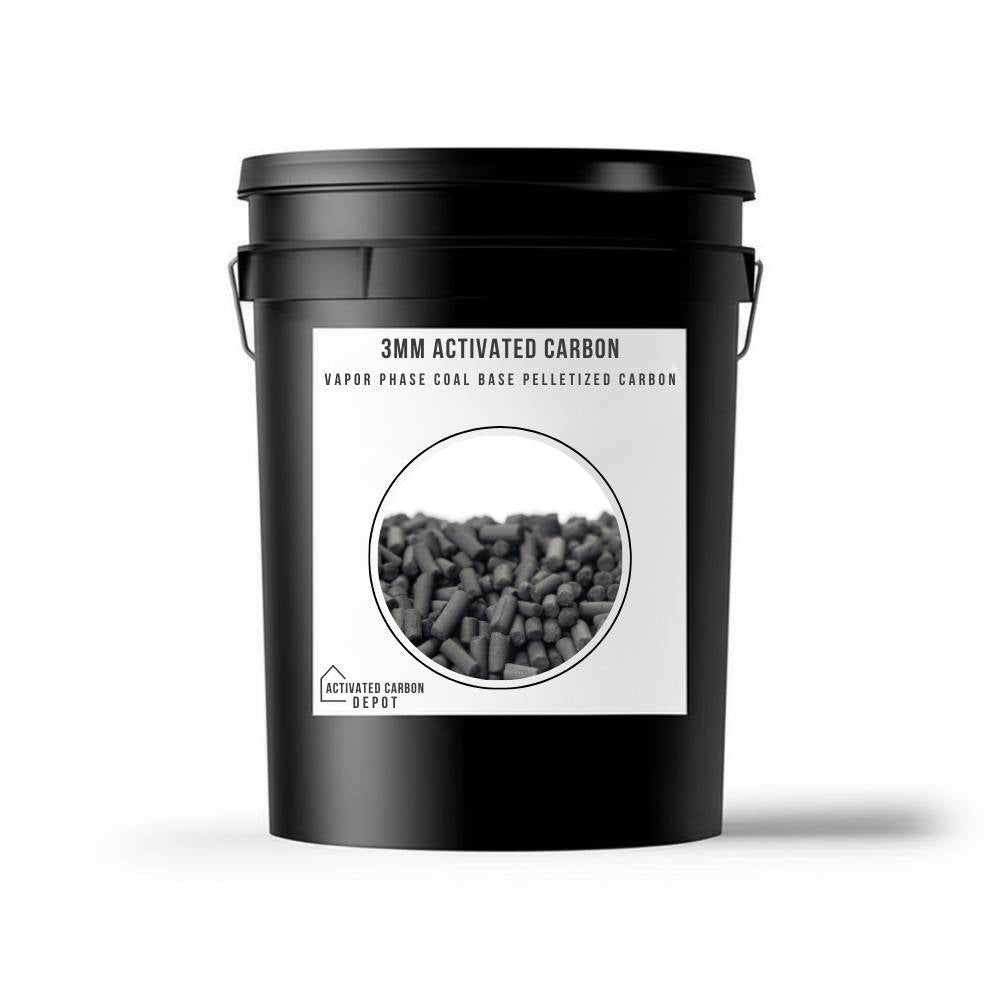
At Activated Carbon Depot, our Activated Carbon for Fuel Vapor Canisters is derived from 3mm coal based carbon specifically designed for fuel vapor canister refills. Properly sized pelletized carbon offers consistent airflow, high mechanical strength, excellent vapor adsorption, and low pressure drop — making it well suited for many vapor filtration applications.

Why Coal-Based Activated Carbon Is Often Preferred
Coal-based activated carbon has long been used in vapor recovery applications because it offers excellent hardness, strong vapor-phase adsorption, high durability, long service life, and consistent pellet manufacturing. These characteristics make it well suited for handling repeated adsorption and purge cycles.
Common Mistakes When Refilling an EVAP Canister
- Using Aquarium Carbon: Aquarium carbon is designed for water filtration—not gasoline vapor adsorption.
- Using Powdered Carbon: Powdered carbon restricts airflow and is not suitable for EVAP systems.
- Mixing Different Carbon Sizes: Inconsistent particle sizes can affect airflow and filtration performance.
- Overpacking the Canister: Packing the carbon too tightly may restrict airflow through the system.
Why Customers Choose Activated Carbon Depot
At Activated Carbon Depot, we specialize in activated carbon solutions for demanding vapor-phase applications. Customers choose our fuel vapor canister media because we provide premium coal-based activated carbon, uniform 3mm pellets, thermally activated media, high hardness for long service life, low dust generation, and consistent manufacturing quality.
In many cases, yes—provided the canister is designed to be serviced and the housing remains in good condition. Choosing the proper activated carbon is just as important as the repair itself. High-quality pelletized activated carbon helps maintain airflow, maximize vapor adsorption, and support reliable long-term performance.
Shop Activated Carbon for EVAP Canister Refills
Premium coal-based pelletized carbon for fuel vapor canisters, EVAP systems, and vapor recovery applications: